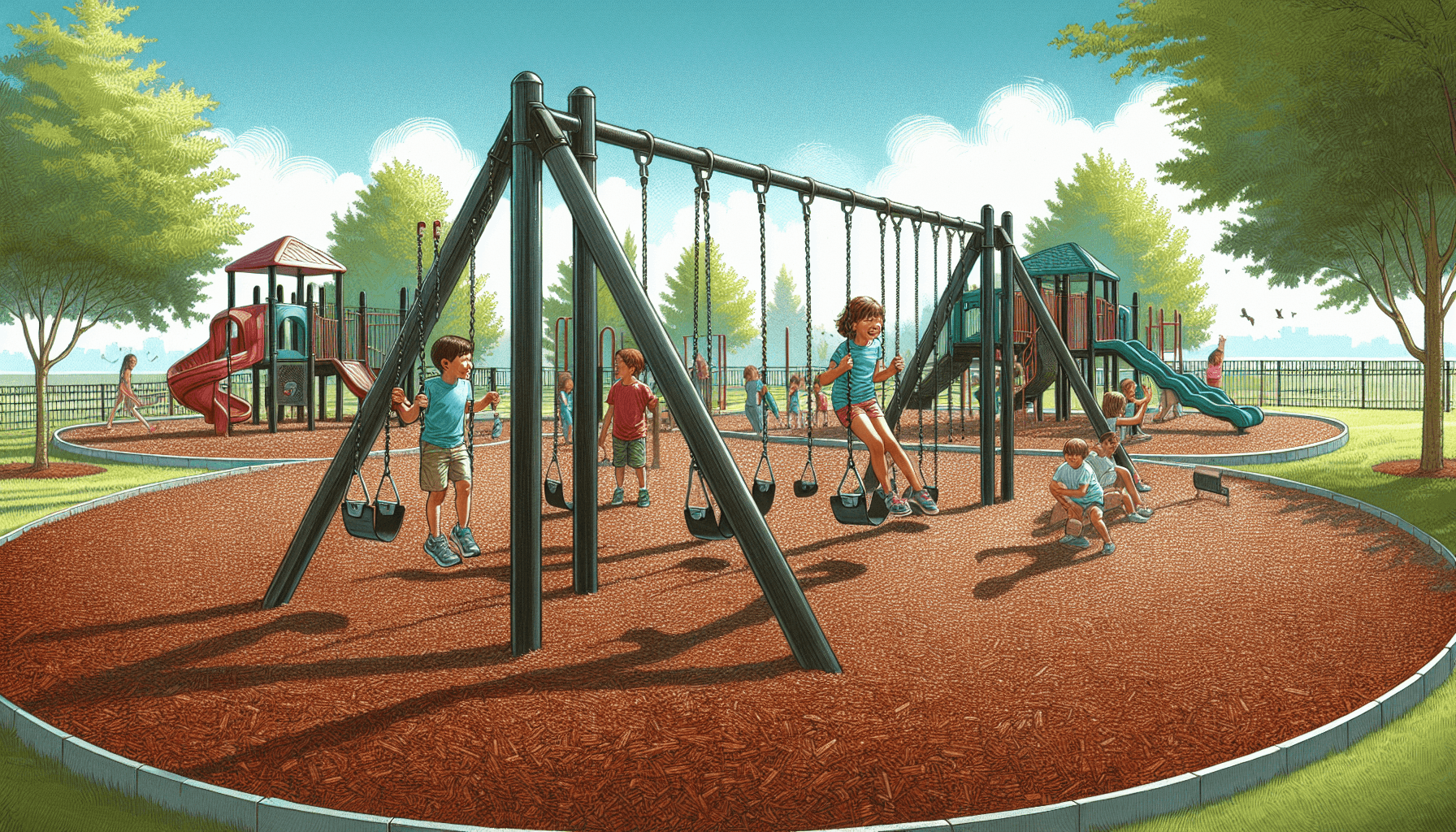
The Great Playground Surface Debate
Choosing the right playground surface involves balancing safety standards, environmental considerations, maintenance requirements, and budget constraints. Two materials dominate the conversation: engineered wood fiber and rubber mulch. Each offers distinct advantages, but understanding their differences helps facility managers, school administrators, and playground builders make informed decisions that align with their priorities and compliance needs.
The choice between these materials affects everything from initial playground mulch installation cost to long-term maintenance schedules. More importantly, it influences safety performance, environmental impact, and the overall playground experience for children.
Understanding Engineered Wood Fiber
Engineered wood fiber playground mulch represents a natural approach to playground surfacing. This material consists of specially processed wood particles that meet strict size and composition requirements outlined in ASTM F1292 and F1951 standards. The manufacturing process creates uniform particles that provide consistent impact attenuation while maintaining proper drainage characteristics.
The material offers several practical advantages for playground operators. Installation typically costs less than synthetic alternatives, making it attractive for budget-conscious projects. The natural composition means it integrates seamlessly with outdoor environments, and children can play on it immediately after installation without concerns about off-gassing or chemical exposure.
Maintenance requirements for engineered wood fiber follow predictable patterns. The material naturally decomposes over time, requiring periodic replenishment to maintain proper depth and safety performance. However, this decomposition process enriches surrounding soil and supports local ecosystems, turning maintenance into an environmental benefit rather than just an operational expense.
The Case for Rubber Mulch
Rubber mulch takes a different approach to playground safety surfacing. Made from recycled tires that undergo extensive processing to remove steel and fabric components, this material creates a durable surface that maintains its properties for extended periods. The manufacturing process typically includes color treatments and antimicrobial additives to enhance performance and appearance.
From a maintenance perspective, rubber mulch offers significant advantages. It does not decompose like organic materials, reducing the frequency of replacement cycles. The material resists displacement better than wood fiber, maintaining more consistent coverage even in high-traffic areas. These characteristics can offset higher initial costs through reduced long-term maintenance requirements.
Safety performance represents another key consideration. Rubber mulch provides excellent impact attenuation and maintains its protective properties regardless of moisture conditions. Unlike organic materials, it does not become compacted when wet, ensuring consistent safety performance throughout various weather conditions.
Environmental Impact Considerations
The environmental comparison between these materials reveals important distinctions that influence decision-making for environmentally conscious organizations. Engineered wood fiber comes from renewable forest resources and returns to the ecosystem through natural decomposition. This cycle creates a carbon-neutral footprint when sourced from sustainably managed forests.
Rubber mulch addresses a different environmental challenge by repurposing waste tires that would otherwise occupy landfill space. A typical playground installation can recycle hundreds of tires, contributing to waste reduction goals. However, the material remains in the environment indefinitely, and disposal at end-of-service life requires special handling.
Water quality considerations also differ between materials. Wood fiber allows natural filtration and does not introduce synthetic compounds into groundwater. Rubber mulch has undergone extensive testing for leachate concerns, with studies generally showing minimal impact under normal playground conditions. However, some facilities prioritize natural materials to eliminate any potential for synthetic material interaction with soil and water systems.
Cost Analysis and Budget Planning
Playground mulch installation cost varies significantly between these materials, but the comparison extends beyond initial pricing. Wood fiber typically offers lower upfront costs, making it attractive for projects with constrained budgets or those requiring immediate implementation. The material is widely available, and installation procedures are straightforward for most contractors.
Rubber mulch requires higher initial investment but can provide better long-term value in specific situations. Facilities with limited maintenance resources or those in high-use environments may benefit from the reduced replacement frequency. However, calculating true cost-effectiveness requires considering local pricing, usage patterns, and organizational maintenance capabilities.
Real-time playground mulch quotes help facilities compare actual costs rather than relying on general estimates. Pricing can vary significantly based on geographic location, project size, and current material availability. Digital platforms that provide instant pricing for both materials enable more accurate budget planning and decision-making.
Safety Standards and Compliance
Both materials can meet ASTM safety standards when properly installed and maintained, but their compliance characteristics differ. Engineered wood fiber requires regular monitoring to ensure adequate depth, as natural settling and decomposition gradually reduce protective capability. Testing protocols must account for seasonal variations and moisture effects on impact attenuation.
Rubber mulch provides more consistent safety performance over time, but initial installation must ensure proper depth and coverage. The material's resistance to displacement means safety zones maintain protection longer, but any deficiencies in initial installation persist until corrected through maintenance.
IPEMA certification provides additional assurance for both materials, indicating that products have undergone independent testing to verify compliance with safety standards. Facilities focused on minimizing liability risks often prioritize certified materials regardless of type.
Making the Right Choice for Your Facility
Selecting between engineered wood fiber and rubber mulch requires evaluating organizational priorities, budget constraints, and operational capabilities. Facilities prioritizing natural materials, lower initial costs, and environmental compatibility often favor wood fiber. Those emphasizing reduced maintenance, consistent performance, and waste reduction may prefer rubber mulch.
The decision should also consider local factors such as climate conditions, usage intensity, and maintenance resource availability. High-traffic playgrounds in wet climates might benefit from rubber mulch's durability, while facilities in moderate climates with adequate maintenance staff might find wood fiber more suitable.
GetMulch.com manages both types of playground mulch installation and bulk delivery through our nationwide network of pre-vetted partners. Our platform provides real-time pricing for both materials, enabling facilities to make informed comparisons based on actual costs rather than estimates. We handle project planning, scheduling, and execution while ensuring compliance with safety standards regardless of which surface material best meets your needs.