You finished spreading mulch, measured the depth, and left the site with everything looking perfect. Two weeks later the client calls asking why there are thin spots. This is mulch settling, and it happens on every job.
Fresh EWF compacts under its own weight and foot traffic. The first few weeks after install see the most dramatic settling. A 12-inch initial spread can drop to 10 inches within 30 days just from natural compression and moisture changes. This is normal, not a failure.
Why Settling Happens
Several factors drive it:
Initial moisture content. Mulch delivered wet compacts more as it dries. Mulch that arrives dry may actually expand slightly if it absorbs rain, then compress when it dries again.
Foot traffic patterns. Kids running the same routes between equipment create visible wear paths faster than you expect. Swing exits and slide landings take the hardest hit.
Gravity does the work. Loose fiber settles into its own voids. The fluffier the initial spread, the more room there is to compress.
What to Tell Clients Upfront
Set expectations during the sales conversation, not after they call with complaints. Here is the conversation that works:
"The mulch will settle 1 to 2 inches in the first month. This is normal. We build that into our initial depth so you stay compliant. Some high-traffic spots may need attention sooner, and we can schedule a top-off visit if you want us to handle that."
Clients who understand settling upfront almost never complain about it later. The ones who get surprised are the ones who call angry.
Build the Top-Off Into Your Quote
You have two options on pricing:
Option 1: Quote heavy on initial install. Spread an extra inch knowing it will settle. Tell the client you are overspreading intentionally. This works best for clients who want a single invoice and no follow-up visits.
Option 2: Quote initial install plus scheduled top-off. Lower upfront price, scheduled return visit 30 to 60 days out. This works for clients who want to see the settled condition before deciding where to add material.
Either way, document your approach in the proposal. Get it in writing that settling is expected and accounted for.
When to Schedule the Return Visit
If you are doing a top-off visit, schedule it 30 to 45 days after initial install. Earlier than that and you are chasing a moving target. Later than that and high-traffic areas may be out of compliance.
Mark the date on your calendar when you leave the job site. Don't rely on the client to call you. They forget, then fail an inspection, then blame you.
Measuring After Settling
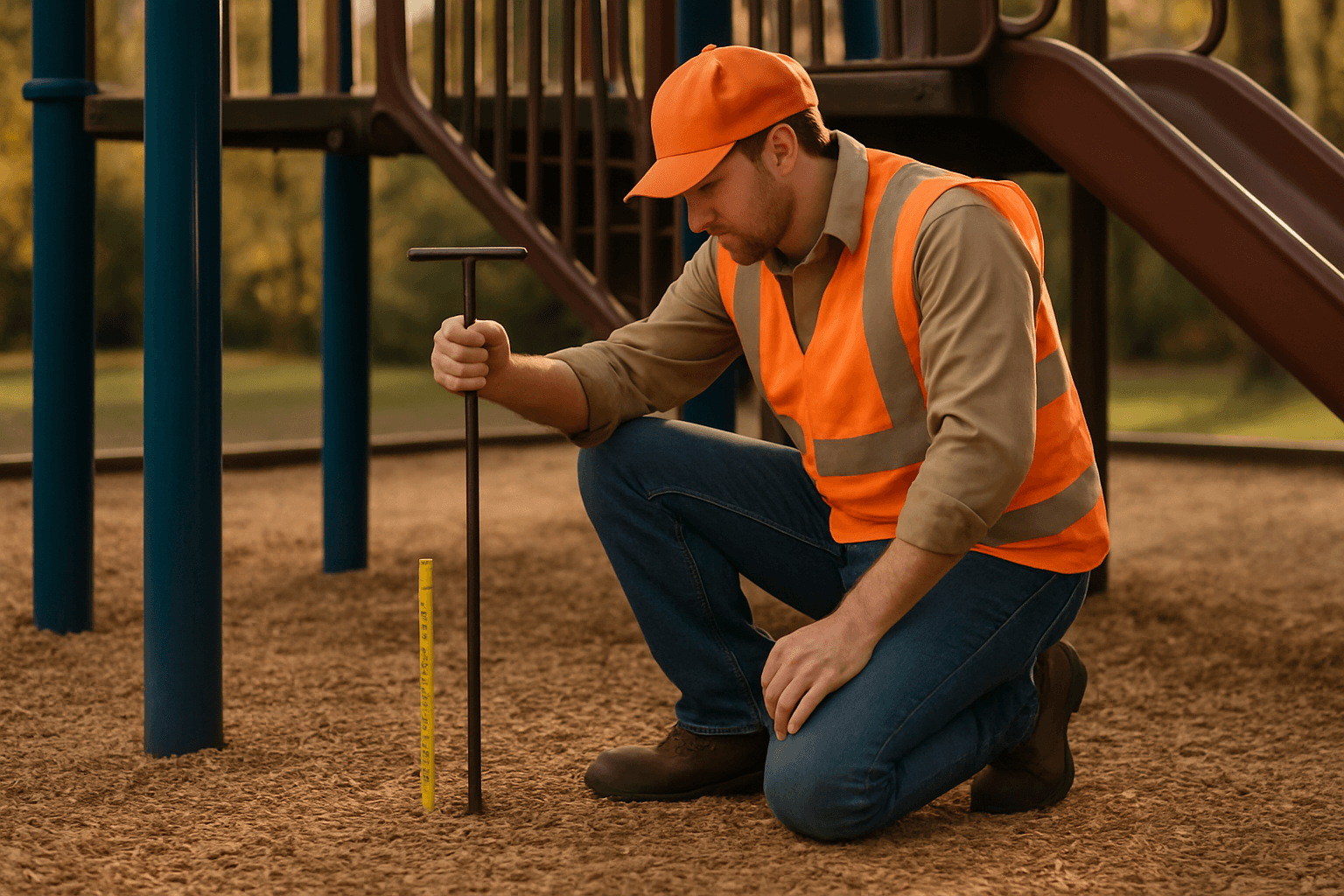
Bring a depth probe on your top-off visit and document what you find. Measure in at least five locations:
- Center of the play area
- Under the highest equipment
- Two high-traffic exit points
- One low-traffic edge
Record the depths. If any spot is below the required minimum for the equipment height, add material until it tests compliant. Take a photo of the probe showing depth. This documentation protects you if there is ever a question later.
The Bottom Line
Settling is physics, not poor workmanship. Handle it by setting expectations upfront, building either extra depth or a scheduled top-off into your quote, and documenting your measurements. Clients who understand what to expect dont complain when it happens.