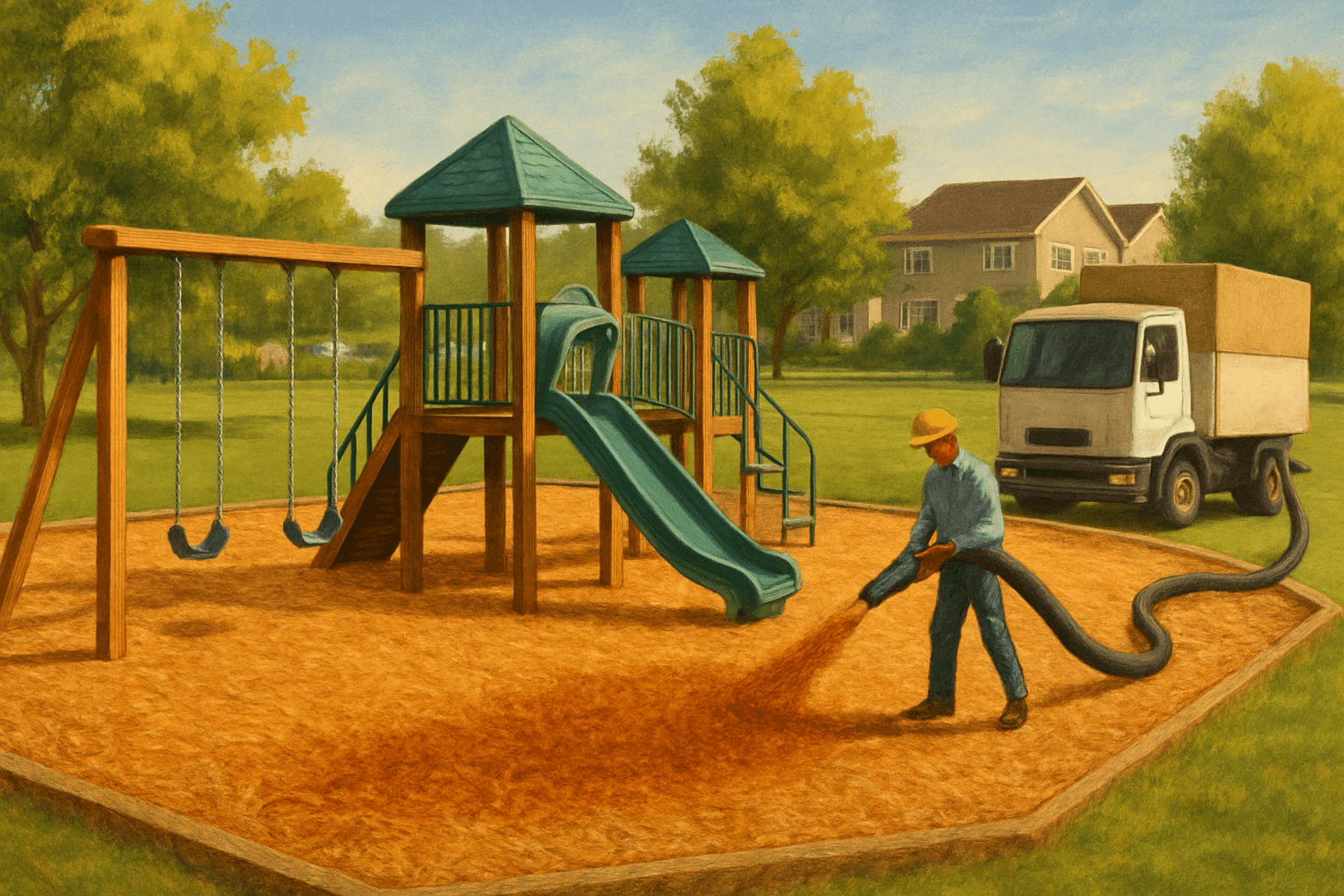
You're three days into a 5,000-square-foot rubber mulch install and you're already $2,000 over budget. Fuel spiked. Site prep took longer than you quoted. The playground director is asking questions. You've been here before.
Going over budget on a mulch job isn't a career-ender. How you handle the recovery determines whether you keep the client or lose them. Here's how to stop the bleeding, finish the job, and protect the relationship.
Stop and Do the Math First
Don't guess. Pull your invoice, your material receipts, and your labor hours before you talk to anyone. You need to know exactly where the overage came from.
Common culprits:
- Quantity miscalculations. Two inches of extra depth across a 4,000-square-foot area adds up fast.
- Delivery surprises. Fuel surcharges, extra trips, and site access fees that weren't in the original quote.
- Hidden site conditions. Water retention, low subgrade, or old surfacing that needed demo before you could install.
- Labor overruns. Schedule slippage, crew issues, or weather that pushed overtime.
Be specific. "We're over by $2,400 because the subgrade on the east section was 6 inches lower than the assessment showed" is a conversation you can have. "Costs were higher than expected" is not.
Get in Front of It Before They Ask
Most contractors wait until the invoice lands and hope the client doesn't notice. They always notice.
Call the owner or playground director the same day you identify the overrun. Keep it short: what happened, what it cost extra, what you're doing about it. Owners who've worked with contractors for any length of time know that site conditions change. What kills trust is finding out after the fact. A contractor who flags a problem early looks like a professional. One who buries it looks like they're hiding something.
Don't lead with dollar amounts. Lead with facts: "The subgrade on the east side was lower than our original assessment showed. We needed an extra 4 yards of material to hit ASTM F1292 depth requirements. I want to walk you through what that means for the final invoice."
Know Your Contractual Position
Before the conversation, re-read your contract. Look for:
- Change order clauses. Do you have a written process for scope changes? If site conditions changed materially, a change order may be your documented path to recovering costs.
- Unit pricing schedules. If you bid per-yard and actual usage exceeded estimates, unit pricing protects you. Pull those line items.
- Unforeseen conditions language. Many commercial contracts include provisions for unforeseen subsurface or site conditions. Know whether yours does.
If your contract doesn't have these protections, that's a fix for your next quote template. For this job, you're negotiating. That's a different conversation.
Decide What You're Going to Absorb
You probably can't recover every dollar. Decide before the meeting what you're willing to eat and what you need the owner to cover.
If the overage was caused by your miscalculation, absorb more of it. A wrong quantity estimate is on you. Material price swings mid-project are a shared risk. Site conditions that weren't visible during the walkthrough? That's the strongest case for a change order.
Splitting the difference on disputed costs isn't weakness. It keeps the relationship alive. A $600 concession that preserves a client who runs 4 playground projects a year is a good trade. Walking away with a $600 win and a lost account isn't.
Tighten Up the Back Half
If there's still work to do, look for recovery on the remaining scope. Review square footage and depth requirements against what's actually on-site. Sometimes a delivery discrepancy or staging miscalculation means you've got more material on-site than the paperwork shows.
Check your remaining crew hours. If you're running overtime because the schedule slipped, restructuring the last few days can save labor cost without pushing the completion date. Small recoveries add up. Trimming 8 labor hours and reclaiming a partial pallet of material can close a meaningful chunk of a budget gap.
Log It for the Next Quote
Every over-budget job is data. After this one closes, document:
- Actual cubic yards delivered versus quoted, and what drove the difference.
- Site access conditions that affected delivery or equipment use.
- Actual hours by task: prep, install, cleanup, inspection.
Most over-budget jobs aren't random. They're the same three or four conditions showing up on different sites. A drainage issue. A soft subgrade. A demo that took half a day nobody priced for. Find the pattern and price it in. Your estimates get tighter every year.
What Recovery Looks Like in Practice
You quoted a 3,200-square-foot engineered wood fiber install at 12-inch compressed depth. You estimated 40 cubic yards and 16 labor hours. Actual: 47 yards and 22 hours, driven by a drainage issue that required re-grading before install.
Your overrun: about $1,800 in materials, $600 in labor.
You call the owner the same day you see the gap. You explain the drainage condition and bring photos. You present a change order for $1,400, absorbing $1,000 yourself. The owner approves it, because they saw the drainage issue too and they know you flagged it honestly.
That's how you recover a job that went over. Not perfectly. Professionally.
The Contractors Who Keep Getting Called Back
The playground builders who build long client lists aren't the ones who never have problems. They're the ones who handle problems the right way. They call early. They explain clearly. They take fair responsibility. And they fix the process so the same thing doesn't bite them twice.
Budget overruns are part of this business. How you handle them is what clients remember.