The Layer Nobody Talks About Until the Job Fails
You can install perfect EWF depth. Right product, IPEMA certified, correct quantities. And still fail your next inspection because the drainage system under it is wrong.
Water sitting under your mulch layer compresses it, displaces it, and eats away at your critical fall height faster than any foot traffic ever will. The mulch is the visible part. The drainage infrastructure is where these projects actually succeed or fail.
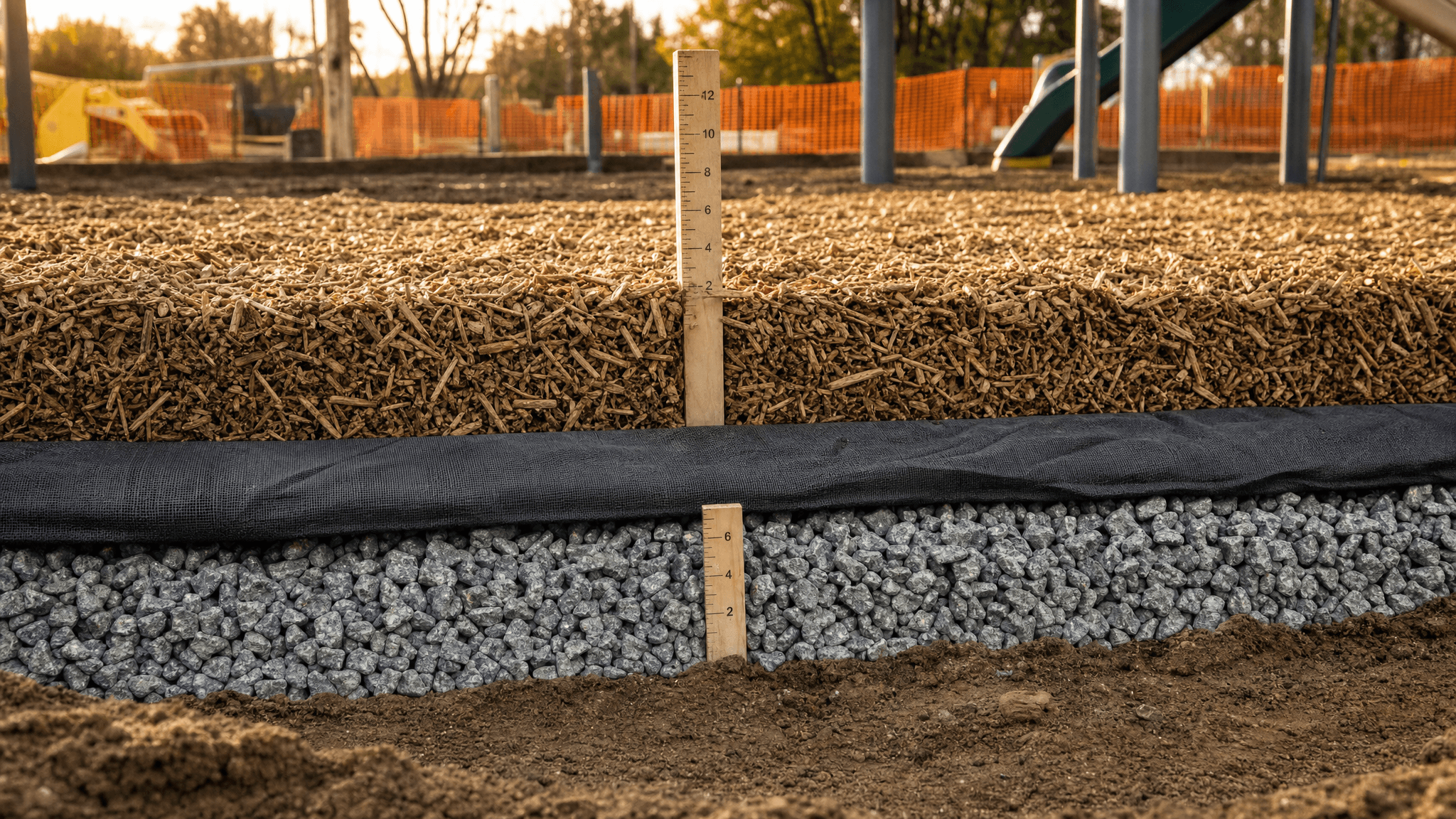
How the Three-Layer System Works
A properly built loose-fill playground surface isn't just mulch dumped on flat ground. It's a system with three distinct components, and each one has a job.
Drainage aggregate base. Typically 4-6 inches of clean angular gravel (3/4" stone is common). This creates the free-draining void space that keeps water moving down and out instead of pooling under your mulch. Don't substitute pea gravel or compacted fill here. You need angular stone that stays open, not round stone that packs tight.
Geotextile separation fabric. This layer sits between the drainage aggregate and the loose-fill surface. It keeps EWF from migrating down into the gravel voids over time. Without it, your mulch depth drops faster than expected as material fills the layer below. Use a woven geotextile rated for drainage separation, not landscape fabric, which restricts flow and clogs.
Loose-fill surface layer. EWF, rubber mulch, or other ASTM F1292-compliant material goes on top. Depth requirements depend on equipment fall height. The required critical height rating for your material drives your minimum installed depth, plus a compaction buffer.
All three layers work together. Pull one out and the others can't do their job.
The Mistakes That Cause Failures
Most drainage problems on playground jobs come down to a few repeating errors.
Skipping the drainage layer entirely. This happens more than you'd think on sites where the ground is sandy or already drains well. Even well-draining native soil compacts under load and foot traffic. The engineered aggregate base gives you consistent, predictable drainage regardless of what's underneath.
Wrong sub-base profile. The aggregate needs somewhere to drain. If the site doesn't have drain tile, French drains, or natural slope, you end up with a saturated aggregate layer that's just as bad as no drainage at all. On flat sites, perforated pipe sloped to daylight is the answer. Confirm the drainage outlet before you start digging.
Inadequate base compaction. The aggregate needs to be set before fabric and mulch go down. A loose, uneven base creates low spots where water collects and mulch depth inconsistencies that show up on your depth verification readings at closeout.
Landscape fabric instead of geotextile. Landscape fabric clogs with fine organic particles and stops letting water through. Woven geotextile is the right call. The cost difference per square foot is minimal. The performance gap over a 5-7 year maintenance cycle is not.
No edge drainage. Containment borders trap water if they don't have drainage gaps or weep holes at intervals. EWF pressed against a solid timber border with no drainage path stays saturated after every rain. Build drainage gaps into your containment edge design from the start.
What to Confirm Before Mulch Hits the Site
Get these four things locked in before you order.
Drainage outlet confirmed. Walk the site. Find where water exits the play area. If you can't identify a clear drainage path, flag it with the owner before you dig. A drainage problem discovered mid-install is a change order conversation you don't want to have.
Base depth specified. Know whether the plan calls for 4" or 6" of drainage aggregate. This affects your total excavation depth, which affects rough grading and the final surface elevation relative to surrounding hardscape, curbs, and paths.
Fabric spec agreed. If you're handing off to a separate sub, get the geotextile spec in writing. Substitutions happen on site when materials run short. A line item in the contract prevents arguments at closeout.
Mulch depth confirmed. Get the equipment fall heights from the manufacturer before you order. Your ASTM F1292 required depth comes from those numbers. Install to the required depth plus a 15-20% compaction buffer on EWF, 10-15% on rubber mulch.
Document Each Layer Before It Gets Covered
Here's the thing: once the mulch is down, nobody can see the drainage layers beneath it. That creates documentation risk. If someone questions whether the sub-base was built correctly two years later (insurance claim, compliance audit, or just a scope dispute), you want proof.
Take photos of each layer before the next one goes down. Aggregate before fabric. Fabric before mulch. Include a measurement stake or depth indicator in the frame so the photos have real context, not just a close-up of gravel.
Ten minutes per layer. Add them to your job closeout package alongside your IPEMA certificate, depth verification readings, and delivery receipts. That package is your protection if anything is ever questioned.
Get the Right Material for the Top Layer
GetMulch delivers IPEMA-certified EWF and rubber mulch with full compliance documentation included with every order. Whether you're doing a new install or a top-off on an existing site, we can get material to your job site on schedule. Get a quote at getmulch.com/get-a-quote.