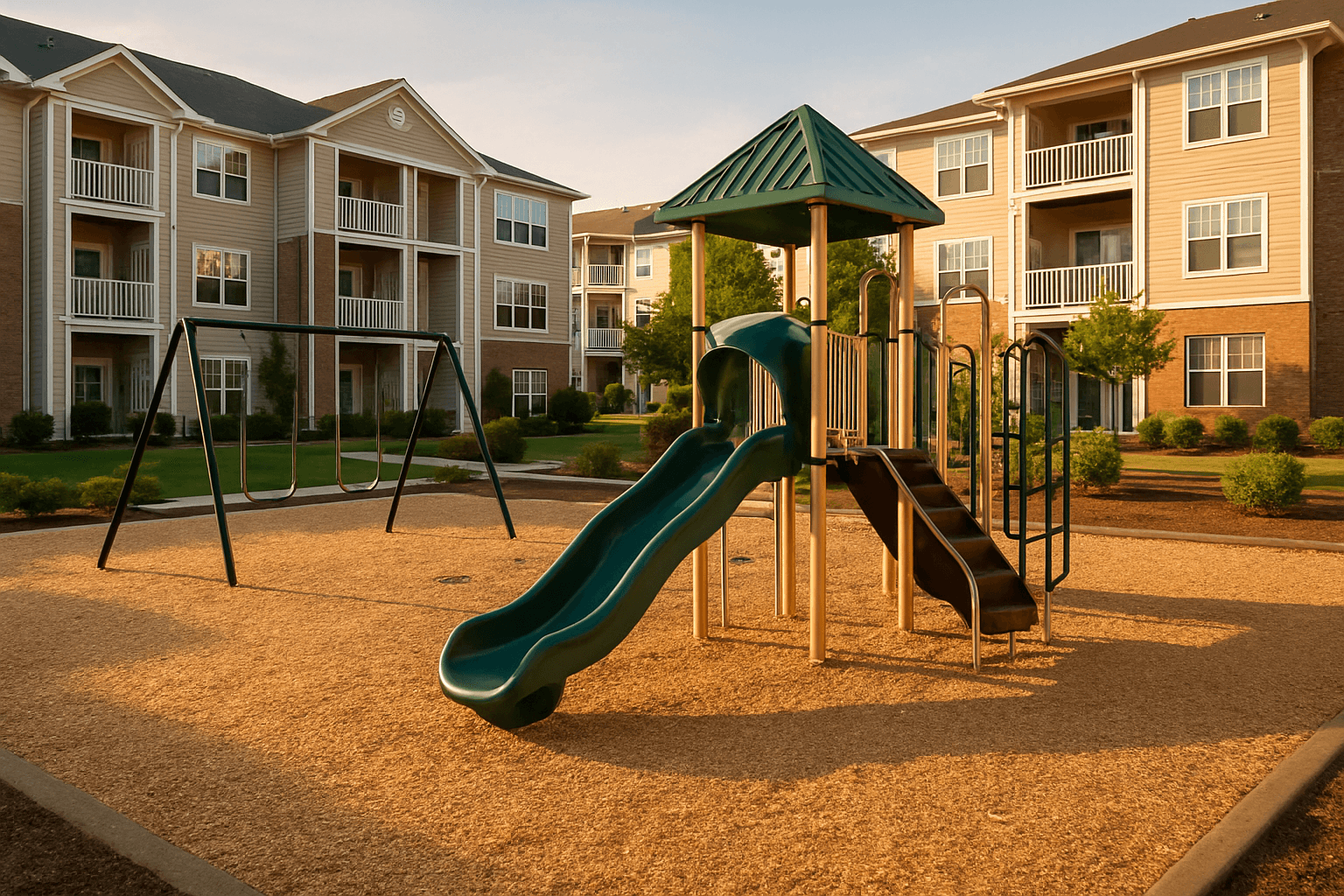
Apartment complexes have playgrounds in common areas. They see heavy use, tenant complaints, and property manager pressure to keep costs down. If you want this work, understand what makes it different from school or park projects.
Working With Property Management Companies
You are not selling to the residents. You are selling to the property manager, who answers to the ownership group, who cares about NOI and liability.
Property managers want three things: low cost, minimal complaints, and documentation for their files. Lead with those priorities.
Frame your pitch around reducing liability exposure and tenant complaints. "Compliant surfacing means fewer injury claims" lands better than technical spec talk. Property managers are not playground safety experts. They are risk managers.
Tenant Complaint Handling
Tenants complain about playgrounds. Splinters, bare spots, mulch in the landscaping, color fading. These complaints go to the property manager, who passes them to maintenance, who may or may not know what to do.
When you install surfacing at an apartment complex, give the property manager a complaint response guide. One page. What is normal (settling, color fade). What requires attention (bare spots, foreign objects). Who to call (you).
This positions you as the expert they call when complaints come in. It also filters nuisance complaints from legitimate maintenance needs.
Maintenance Frequency for High-Turnover Properties
Apartment playgrounds see different use patterns than school playgrounds. Use happens evenings and weekends. Turnover means new families constantly discovering the playground.
High turnover = high traffic. Budget for more frequent top-offs than you would for a single-user facility.
Recommend quarterly inspections and annual top-offs as a baseline. Some high-traffic complexes need top-offs twice a year. Price a maintenance contract that covers these visits. Property managers prefer predictable annual costs over surprise invoices.
Budget Conversations
Property managers work with approved budgets. Playground surfacing is either a capital expense (big project, reserve fund) or an operating expense (maintenance, monthly budget).
Ask which bucket the project fits in. If it is capital, they may need ownership approval. If it is operating, they may have more flexibility but lower dollar limits.
For resurfacing projects under the capital threshold, frame it as maintenance. For full replacements, help them build the case for a capital request. Either way, match your proposal to their budget structure.
Access Challenges
Apartment complexes have gates, parking structures, and narrow access points. Dump trucks full of mulch need room to maneuver and dump.
Walk the site before quoting. Identify where the truck will stage, how material gets to the playground, and what obstacles exist. Gates that require fob access. Parking spots that need cones. Resident notification requirements.
Include access notes in your proposal so there are no surprises on install day. If you need the gate held open from 7 AM to noon, say so. If residents need to be notified 48 hours ahead, specify that.
Liability Concerns
Rental properties carry liability insurance for common areas. The insurance company may have requirements for playground surfacing. Ask the property manager about their policy requirements.
Apartment owners are more lawsuit-averse than most clients. They know that an injured child means a claim against the property. Use this to your advantage. Compliant surfacing is liability reduction. Frame it that way.
Provide certificates of insurance with your quote. Property managers may require you to name their ownership entity as additionally insured. This is standard. Have your agent ready to issue the certificate.
The Bottom Line
Apartment complex work is recurring if you build the relationship. Property management companies manage multiple properties. One good project leads to referrals. Understand their priorities: cost control, complaint reduction, liability coverage. Speak their language and the work follows.