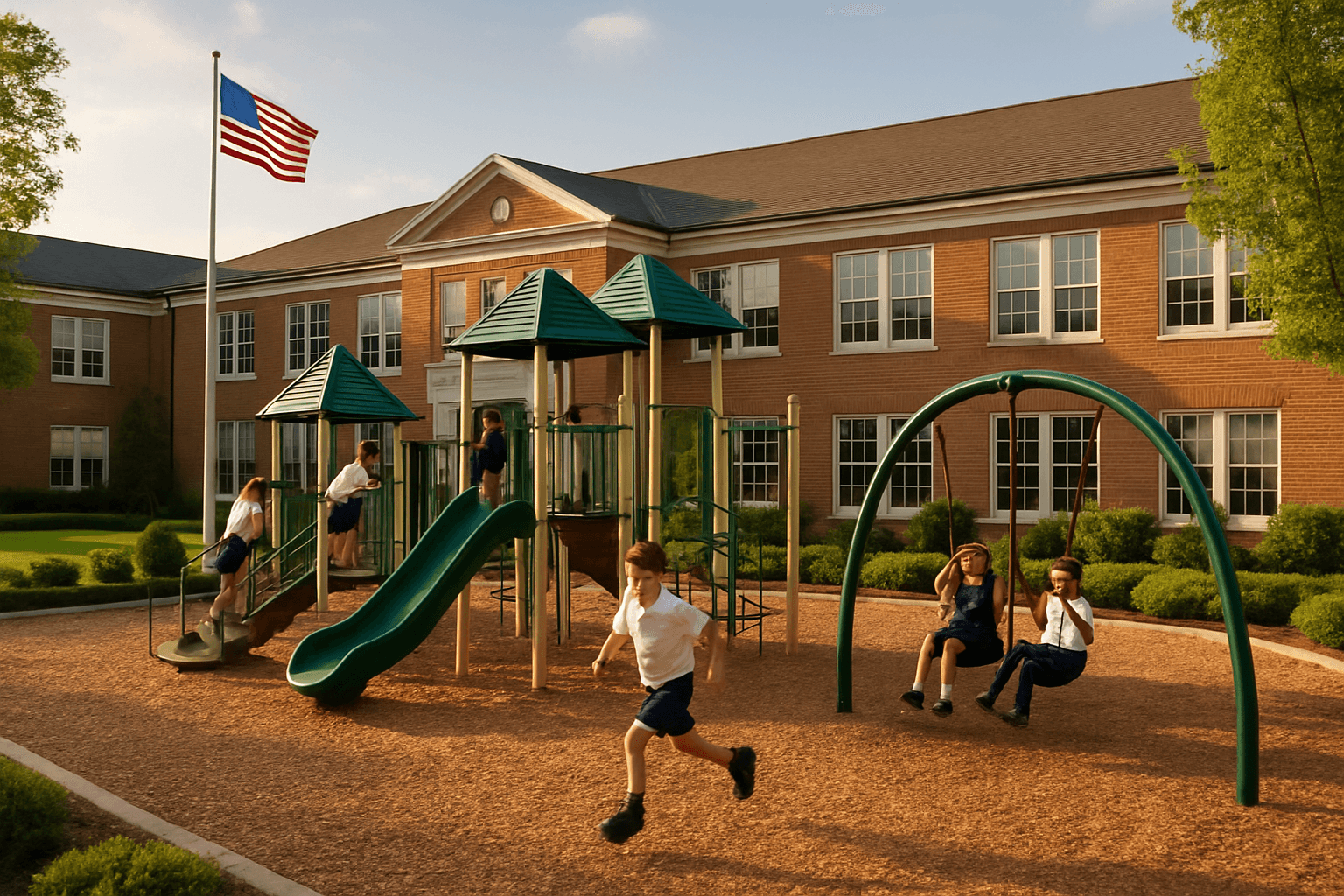
Private schools have money. They also have boards, parent committees, and administrators who answer to both. Selling playground surfacing to a private school isn't about convincing someone mulch is a good idea. It's about giving them the language and documentation they need to justify the expense to everyone watching.
Here's how to structure your conversations and your proposals to match what private school administration actually cares about.
They're Thinking About Liability First
Every private school administrator has had the same nightmare: a kid gets hurt on the playground, the family sues, and the school's insurance goes through the roof or gets dropped entirely.
When you talk about surfacing, lead with safety compliance. Not "this mulch looks great" but "this installation brings your playground into compliance with ASTM F1292 and F2075, which is what your insurance carrier wants to see."
Have your certifications ready. Certificates of compliance for the material, documentation of proper depth, and a signed completion certificate that they can hand to their insurance company. Make it clear that you're not just spreading mulch. You're delivering a documented, defensible safety installation.
Budget Cycles Matter
Private schools don't buy things whenever they want. They have fiscal year budgets, capital improvement plans, and sometimes fundraising campaigns tied to specific projects.
Early in your conversation, ask: "When does your fiscal year start?" and "Is this coming from your operating budget or a capital improvement fund?"
If their fiscal year starts July 1 and you're talking to them in May, they might not have current-year budget left but could be eager to commit next year's funds. If there's a capital campaign running for playground improvements, your surfacing work might get folded into that.
Understanding their budget cycle lets you time your proposal right. A quote delivered a week before budget planning starts gets more attention than one delivered after they've already allocated everything.
Give Them a Decision Package, Not Just a Quote
Private school administrators don't just decide to hire you. They recommend you to a board, a finance committee, or a head of school who has final approval.
Your job is to arm them with everything they need to make that recommendation easy.
A good proposal for a private school includes:
- A one-page executive summary that a board member can skim in 30 seconds
- Clear safety compliance language tied to ASTM standards
- Material specifications with certifications attached
- A maintenance schedule showing what ongoing care looks like
- Before-and-after photos from similar projects (ideally other schools)
- A clear timeline that avoids disrupting the school calendar
- Payment terms that work with their disbursement schedule
If you hand them a one-page quote with a number and no supporting documentation, you're making their job harder. Make their job easy.
Timing Is Everything
Private schools have periods when construction is welcome and periods when it's impossible.
Best timing: Summer break, winter break, spring break. The kids are gone, access is easy, and there's no disruption to daily operations.
Worst timing: The first two weeks of school, parent visiting days, graduation week, accreditation review periods. If you don't know when these are, ask. "Are there any weeks in the next two months when we absolutely cannot have trucks on campus?"
For large projects, plan backward from their start-of-school date. If school starts September 3 and you need five days for installation plus two days for inspection, you're starting no later than August 26. Build in buffer.
Address the Hidden Stakeholders
The person you're talking to probably isn't the only decision-maker. At minimum, there's usually:
- A head of school or principal who has to approve major purchases
- A business manager or CFO who controls the checkbook
- A facilities director who has to maintain whatever you install
- A board or finance committee that reviews large expenditures
Your contact will tell you who else is involved if you ask. "Who else needs to sign off on this?" and "Would it help if I presented to your board directly?" are reasonable questions.
Some schools appreciate a contractor who offers to come explain the project to their decision-makers. It takes the advocacy burden off your contact and shows you understand how their organization works.
Maintenance Matters More Than Install
Private schools think long-term. They're not flipping the property next year. They plan to be operating on this campus for decades.
When you talk about maintenance, emphasize:
- How often top-offs are typically needed (usually every 2-3 years for moderate use)
- What their grounds crew can do themselves vs. what requires a professional
- What warning signs indicate the surfacing needs attention
- How proper maintenance extends the usable life of the installation
Offer a maintenance program. "We can come back annually to inspect depths and address any displacement for a fixed cost. Many schools bundle this into their facilities budget."
This isn't about upselling. It's about showing them you think about their playground the same way they do, as a long-term asset that needs ongoing care.
References Open Doors
If you've done work for other private schools, say so. Early in the conversation: "We recently completed a project at St. Andrew's Academy. Happy to connect you with their facilities director if you'd like a reference."
Private schools talk to each other. They attend the same conferences, sit on the same association boards, and compare notes on vendors. A warm introduction from another school in their network is worth more than any brochure you can hand them.
If you don't have private school references yet, focus on building them. Do excellent work on your first one, and use that relationship to get into others.
The Close Is Different
You're not closing the facilities director in a single meeting. You're giving them what they need to close their board.
Your ask at the end of a proposal presentation shouldn't be "can you sign today?" It should be "when does your board meet next, and would it help if I prepared a summary document for them?"
Match their decision process. If they need three weeks and two committee reviews, plan for that. Push for urgency, but recognize that their internal process is what it is. Trying to shortcut it just makes you look like you don't understand how schools work.