One-time playground surfacing projects pay the bills. Maintenance contracts pay them predictably. If you're not offering ongoing maintenance agreements to your clients, you're leaving money on the table and giving them a reason to call someone else when the mulch gets thin.
Here's how to structure maintenance contracts that work for both you and your clients.
Why Clients Want Maintenance Contracts
Understanding the client perspective helps you sell and structure these agreements better.
Budget predictability: A fixed annual maintenance fee is easier to plan for than emergency top-off calls when an inspector fails the playground.
Compliance peace of mind: Whoever owns that playground is responsible for keeping it safe. A maintenance contract shifts some of that weight to you.
Time savings: They don't want to remember to check mulch depth every season. They want someone else to handle it.
Vendor relationship: When they need new surfacing or expansion work, you're already on site and already in their budget. First call goes to you.
Position maintenance contracts as a service that makes their life easier, not just an expense.
What Maintenance Actually Includes
Be specific about what you're providing. Vague promises create arguments later.
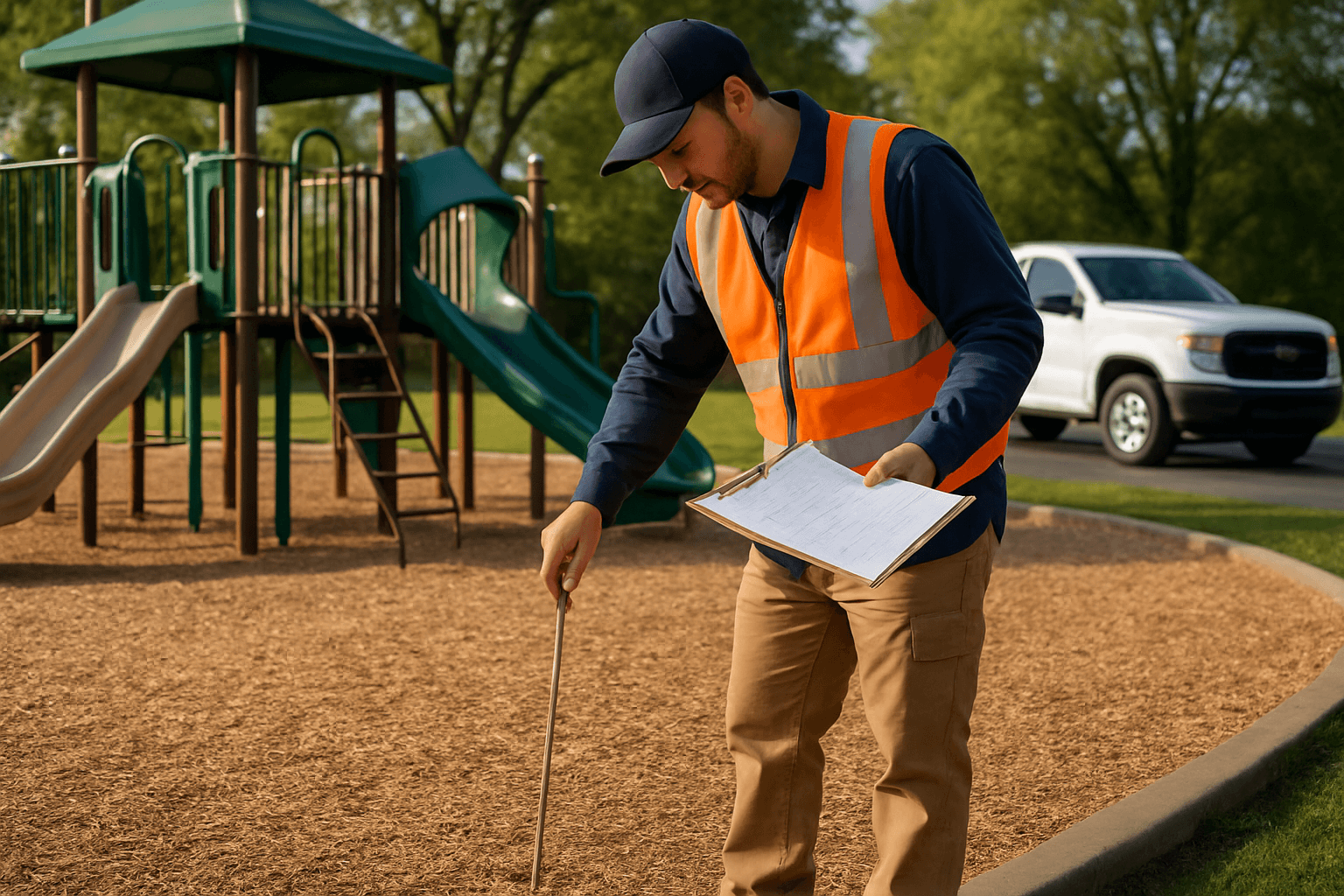
A typical playground surfacing maintenance visit includes:
- Visual inspection of entire surfaced area
- Depth probing at fall zones and high-traffic areas
- Documentation of current conditions
- Redistribution of displaced material
- Minor top-off of thin spots (up to X cubic yards included)
- Border inspection and minor repair
- Written report delivered to client
What it typically doesn't include:
- Major resurfacing (more than 25% of area)
- Containment replacement
- Equipment repair
- Addressing damage from third parties
- Work outside the maintained area
Spell this out in the contract. The client should know exactly what each visit covers.
Pricing Maintenance Visits
Your maintenance pricing needs to cover:
Travel: Getting to the site and back. For remote sites, this might be significant.
Labor: Time for inspection, redistribution, and top-off work. Usually 1-3 hours depending on site size.
Material: A reasonable amount of top-off material. Either include a specific quantity or price it separately.
Overhead and margin: Don't forget to make money on maintenance work.
A common structure is an annual fee that covers 2-4 visits, with additional visits or major material beyond a threshold priced separately.
Example: "$1,200/year covers quarterly inspection visits and up to 3 cubic yards of top-off material annually. Additional material billed at $X per cubic yard."
Price by site, not by square foot. A 2,000 square foot playground that's easy to access and well-maintained is different from a 2,000 square foot playground with terrible access and heavy vandalism.
Visit Frequency
How often should maintenance happen? It depends on usage and conditions.
High-traffic sites (schools, public parks): Quarterly visits. These playgrounds see heavy use and displacement happens fast.
Moderate-traffic sites (churches, private facilities): Semi-annual visits. Spring and fall typically work well.
Low-traffic sites (small HOAs, private schools with limited enrollment): Annual visits, possibly with a mid-year check-in option.
Let the client choose from options, but make a recommendation based on what you know about their site. "Based on the usage I've seen at your playground, I'd recommend quarterly visits. If you want to try semi-annual and it's not enough, we can adjust."
Contract Terms
Keep the contract clear and simple. Key elements:
Term length: Annual contracts are standard. Multi-year agreements can offer slight discounts but lock both parties in.
Payment terms: Bill annually up front, or split into quarterly payments. Annual up-front improves your cash flow.
Cancellation: What happens if they want out? A 30-60 day notice period is reasonable.
Renewal: Auto-renewal with a price increase cap is ideal for you. Manual renewal requires more sales effort each year.
Scope limitations: What's not included and what triggers additional charges.
Liability: You're maintaining, not guaranteeing safety. Make sure your liability language is solid.
The Site Assessment Visit
Before you quote maintenance, do a site assessment. This visit might be free if you did the original installation, or a small fee for new clients.
During the assessment:
- Document current conditions with photos
- Identify any existing problems that need addressing before maintenance begins
- Assess access, usage patterns, and vandalism risk
- Note any equipment changes or site modifications since installation
Your maintenance quote should be based on real site knowledge, not guesses. A playground that's been neglected for two years needs remediation work before you start maintaining, and that remediation should be quoted separately.
Upselling to Existing Clients
If you did the original installation, offer maintenance at project closeout. "Your warranty includes X months of coverage. After that, we recommend a maintenance agreement to keep the surfacing in compliance. Here's what that looks like."
For clients who didn't buy maintenance initially, reach out seasonally. "Hi, we installed your playground surfacing back in [year]. We're reaching out to check on conditions and see if you'd like to set up regular maintenance."
Every maintenance client is also a future resurfacing client. The relationship keeps you top of mind when they have new projects.
Tracking and Documentation
For each maintained site, keep records:
- Visit dates and conditions found
- Work performed
- Material used
- Photos from each visit
- Any issues noted
This documentation protects you (you can prove you maintained properly) and adds value for the client (they have records for their own compliance files).
Build documentation into your process. It should be automatic, not an afterthought.
The Long Game
Maintenance contracts are a long-term business play. The revenue per visit is smaller than a big installation project, but it's predictable and it keeps you connected to clients who will need bigger work eventually.
A portfolio of 50 maintenance contracts at $1,200 each is $60,000 in predictable annual revenue. That's money you can count on regardless of whether big projects close. It covers your overhead in slow seasons and keeps your crews working.
Start small. Offer maintenance to every client who buys installation from you. Build the portfolio over time. In a few years, maintenance might be a significant part of your business.