Introduction
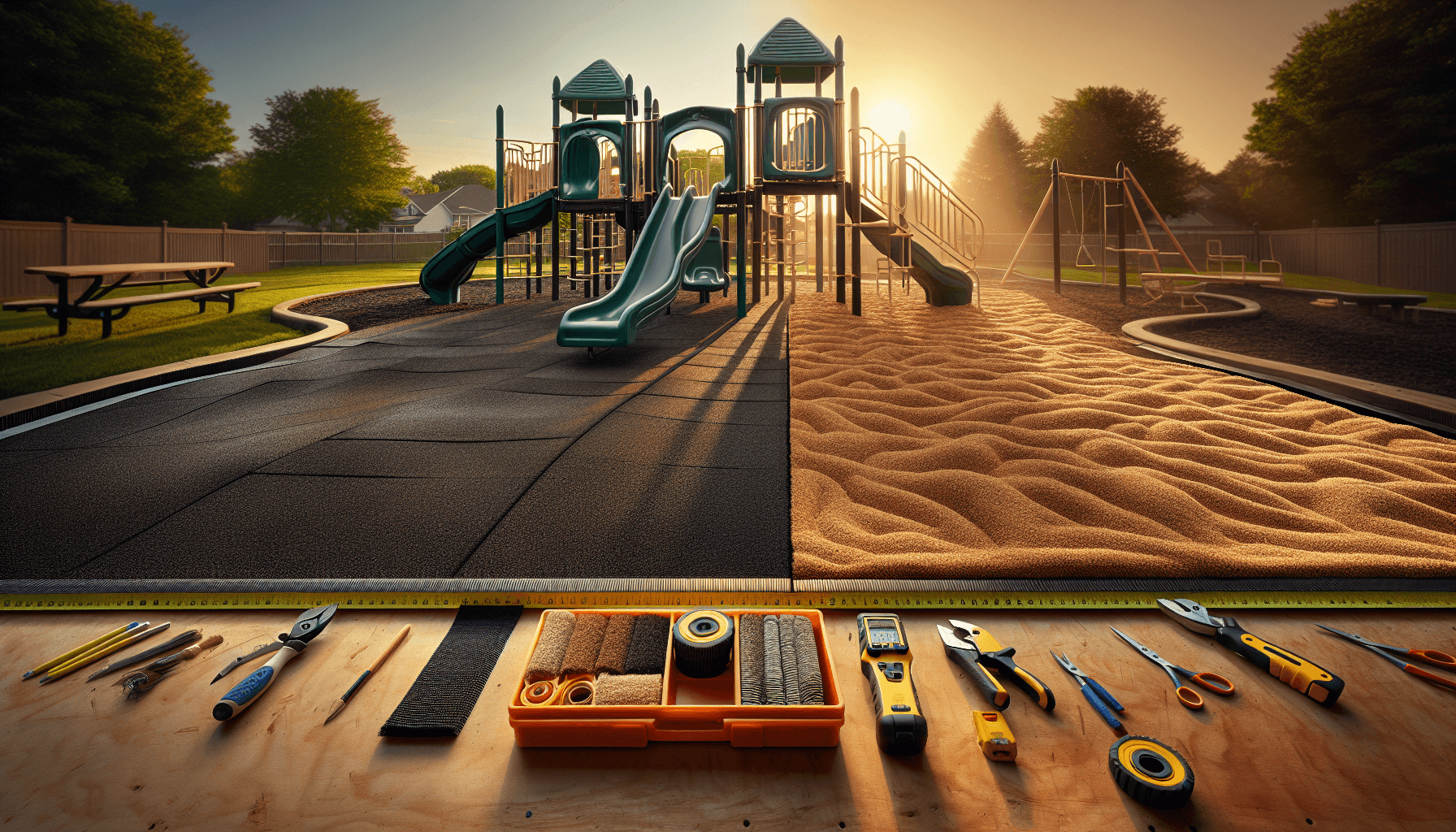
When you're bidding on a playground project, the surfacing material decision can make or break your margin—and your client's satisfaction. Rubber mulch and engineered wood fiber (EWF) are two of the most popular options for safety surfacing, but they perform very differently in the field. Understanding the trade-offs helps you spec the right material for each job and set accurate client expectations.
This guide breaks down the real-world differences between rubber mulch and EWF: cost, longevity, maintenance requirements, safety performance, and when to choose one over the other.
What You're Actually Installing
Rubber mulch is made from recycled tires that have been shredded, cleaned, and processed to remove steel and fabric. It's sold in nuggets or chips that range from 1/4 inch to 2 inches. The material is dyed in earth tones (brown, red, green, tan) and retains its color for years.
Engineered wood fiber (EWF) is virgin wood that's been processed specifically for playground surfacing. Unlike landscape mulch or wood chips, EWF is engineered to meet ASTM F1292 impact attenuation standards. It's fibrous, interlocking, and designed to compress under impact without compacting permanently.
Both materials meet ASTM F1292 and ADA accessibility standards when installed at the correct depth. The difference is how they hold up over time and what your client needs to do to keep them compliant.
Pros and Cons: Side by Side
Rubber Mulch Advantages
- Longevity: 10-12 year lifespan with minimal breakdown
- Low maintenance: No decomposition, no annual top-ups, no nutrient leaching
- Color retention: Stays vibrant for years without fading to gray
- Drainage: Excellent drainage—no standing water after rain
- Doesn't attract insects: Synthetic material won't host termites, ants, or wood-boring insects
- ADA compliant: Maintains firmness for wheelchairs without compacting
Rubber Mulch Disadvantages
- Higher upfront cost: 2-3x the material cost of EWF initially
- Heat retention: Dark colors can get hot in direct summer sun (120°F+ surface temps)
- Static electricity: Can build up static charge in dry climates
- Migration: Lightweight nuggets can scatter outside the play area if not edged properly
- Perceived "chemical" smell: Some clients object to the rubber odor when first installed (dissipates within 2-4 weeks)
Engineered Wood Fiber Advantages
- Lower upfront cost: Typically 50-60% less expensive than rubber mulch per cubic yard
- Natural aesthetic: Looks like wood, smells like wood, appeals to clients who prefer natural materials
- Cooler surface temps: Stays significantly cooler than rubber in summer heat
- Better initial ADA compliance: Interlocks naturally when installed correctly
- Client familiarity: Most clients have seen wood fiber surfaces and trust the material
Engineered Wood Fiber Disadvantages
- Shorter lifespan: 3-7 years depending on climate and foot traffic
- High maintenance: Requires annual top-ups (10-20% material loss per year) to maintain safety compliance
- Decomposes: Breaks down over time, turning to soil and losing impact attenuation
- Compaction issues: High-traffic areas compact quickly and need raking/replenishment
- Insect attraction: Can host termites, carpenter ants, and other wood-boring insects
- Fades to gray: Loses natural wood color within 1-2 years
- Moisture retention: Can hold water after rain, creating muddy spots and accelerating decay
Cost Comparison: 5-Year Total
Let's look at a typical 2,000 square foot play area at 9 inches deep (common for equipment with 6-foot fall heights).
Rubber Mulch:
- Initial install: $8,000-$10,000 (material + labor)
- Maintenance years 1-5: $500-$800 total (minor raking, edge repair, occasional replacement of scattered material)
- 5-year total: $8,500-$10,800
Engineered Wood Fiber:
- Initial install: $3,500-$5,000 (material + labor)
- Maintenance years 1-5: $4,000-$6,000 (annual top-ups, raking, compaction mitigation)
- 5-year total: $7,500-$11,000
By year 5, the costs are roughly equivalent. By year 10, rubber mulch is significantly cheaper because EWF requires a full replacement around year 7.
Longevity and Maintenance Reality
This is where the specs meet the field.
Rubber mulch is genuinely low-maintenance. Your client needs to rake high-traffic zones occasionally and add a few bags if nuggets migrate out of the play area. That's it. No annual deliveries, no mulch mountains in the parking lot, no crew time budgeted for yearly refreshes.
EWF requires active management. In year one, it looks great. By year two, the high-traffic zones under swings and slides are compacting and need raking plus 10-15% additional material. By year three, the whole surface is visibly thinner and grayer. Annual maintenance isn't optional—it's required for ASTM compliance.
If your client has in-house grounds crew, EWF maintenance is manageable. If they're outsourcing everything, those annual service calls add up fast.
Safety Performance: Both Meet the Standard, But...
When properly installed and maintained, both materials meet ASTM F1292 impact attenuation standards. The key phrase is "when properly maintained."
Rubber mulch maintains its safety performance longer because it doesn't decompose. A 9-inch rubber mulch installation in year one performs almost identically in year eight. G-max testing shows consistent results across the lifespan.
EWF loses safety performance as it decomposes and compacts. A 9-inch EWF installation might be 7 inches within 18 months in high-traffic areas. If the client skips annual top-ups, they're out of compliance—and liable if a child is injured.
For clients who are diligent about maintenance, both materials are safe. For clients who install and forget, rubber mulch is the safer bet.
ADA Accessibility Considerations
Both materials can meet ASTM F1951 (wheelchair accessibility) when installed correctly, but they behave differently over time.
Rubber mulch maintains ADA compliance longer because it doesn't compact or decompose. The surface stays firm and navigable for wheelchairs without turning rock-hard.
EWF provides excellent initial accessibility due to its interlocking fibers, but high-traffic routes can become soft or uneven as the material breaks down. Accessible routes may need more frequent top-ups than the rest of the surface.
When to Recommend Rubber Mulch
Rubber mulch is the right choice when:
- The client wants low long-term maintenance and has budget for higher upfront cost
- The play area is in direct sun and heat retention is manageable (or lighter colors are specified)
- The project is in a high-traffic location (schools, parks, daycare centers) where compaction and decomposition would be rapid
- The client has limited grounds crew resources and can't commit to annual surfacing maintenance
- The project is in a wet climate where standing water and decomposition are concerns
- Insects (termites, carpenter ants) are a known issue in the area
When to Recommend Engineered Wood Fiber
EWF is the right choice when:
- The client has a tight upfront budget and can absorb annual maintenance costs
- The client strongly prefers a natural aesthetic over synthetic materials
- The play area is shaded or in a climate where surface temps aren't a concern
- The client has in-house grounds crew who can manage annual top-ups and raking
- The project is low to moderate traffic (residential, small private schools, HOA playgrounds)
- The client is environmentally conscious and prefers biodegradable materials
Final Recommendation: Match the Material to the Client
There's no universal "best" material—only the best material for each client's situation.
For municipal parks, schools, and high-traffic commercial playgrounds, rubber mulch typically delivers better long-term value because it reduces labor costs and eliminates the risk of non-compliance due to deferred maintenance.
For residential projects, small private playgrounds, and clients with active grounds management, EWF offers a cost-effective, natural option that performs well when maintained properly.
The key is setting accurate expectations up front. If you spec EWF, make sure the client understands the annual maintenance commitment. If you spec rubber mulch, explain the heat and odor considerations so they're not surprised.
Ready to Spec Your Next Playground Project?
GetMulch delivers both rubber mulch and engineered wood fiber directly to your job sites—when your crew shows up, your material is already there. No delivery coordination, no scheduling headaches, no material sitting in your yard.
Visit getmulch.com to get pricing and delivery schedules for your next playground surfacing project.