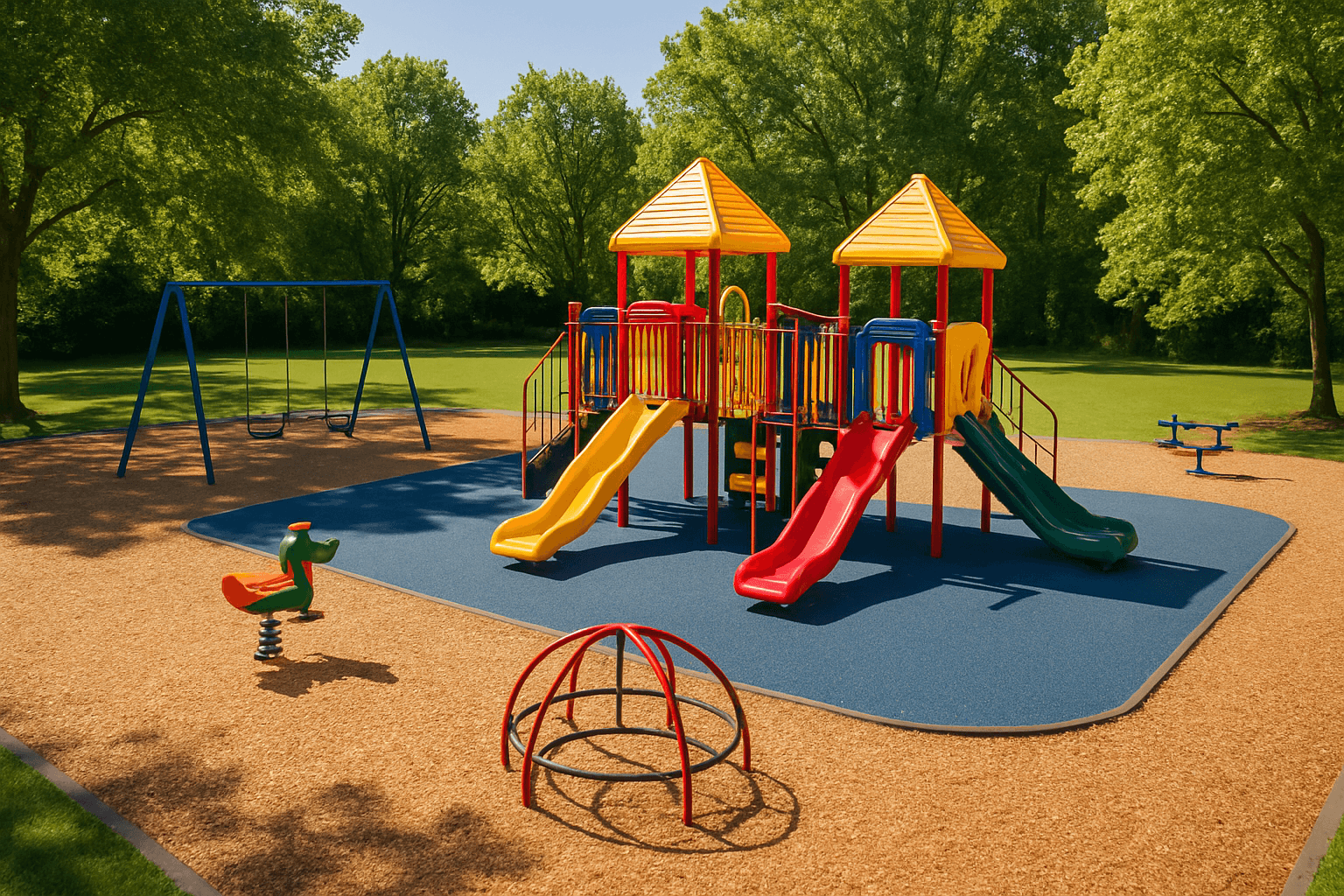
Peak Season Safety: Why Summer Mulch Maintenance Matters
Summer brings peak playground usage—and peak safety responsibility. When children are out of school and temperatures soar, your playground mulch faces its toughest test. Proper maintenance during these critical months isn't just about aesthetics; it's about preventing injuries and protecting your liability.
The Summer Safety Challenge
During summer months, playground traffic can increase by 200-300%. Combined with heat, UV exposure, and afternoon thunderstorms, your safety surfacing endures conditions that can compromise its protective qualities in just weeks.
Key summer stressors:
- Compaction from heavy foot traffic and play
- Material displacement from active play and weather
- Moisture retention creating bacterial growth environments
- UV degradation breaking down organic materials
- Heat buildup creating uncomfortable surface temperatures
Essential Summer Maintenance Schedule
Weekly Inspections (June-August)
Surface depth checks: Use a probe rod to verify 12-inch minimum depth in fall zones. Focus on high-traffic areas under swings, slides, and climbing structures.
Visual assessment: Look for bare spots, excessive compaction, or material migration. Document with photos for liability records.
Debris removal: Clear leaves, trash, and organic matter that can harbor bacteria or create slip hazards.
Monthly Deep Maintenance
Mulch redistribution: Rake and redistribute material from low-traffic perimeter areas to high-wear fall zones. This extends material life and maintains safety coverage.
Depth restoration: Add fresh material as needed to maintain ASTM F1292 compliance. Budget 10-15% annual material replacement for active playgrounds.
Documentation updates: Record all maintenance activities, depth measurements, and material additions. This documentation is critical for insurance and liability protection.
ASTM F1292 Compliance in Summer Heat
Summer conditions can accelerate mulch settling and degradation. The ASTM F1292 standard requires consistent critical fall height protection regardless of season.
Temperature considerations:
- Dark mulch materials can reach 140°F+ on sunny days
- Rubber surfaces may become uncomfortably hot (consider shade structures)
- Engineered wood fiber provides better heat dissipation than rubber alternatives
Moisture management:
- Ensure proper drainage to prevent standing water
- Allow adequate air circulation to prevent bacterial growth
- Consider antimicrobial treatments in high-humidity regions
Proactive Replacement Indicators
Don't wait for obvious failure. Watch for these summer warning signs:
- Depth loss below 10 inches in any fall zone
- Material binding or clumping from moisture and organic matter
- Color change indicating UV breakdown or contamination
- Odor development suggesting bacterial or fungal growth
- Surface temperature exceeding safe levels for bare skin contact
Cost-Effective Summer Strategies
Staged replacement: Rather than full playground replacement, target high-wear areas with fresh material quarterly.
Mixed approaches: Use rubber mulch in high-traffic zones, engineered wood fiber in moderate-use areas for cost efficiency.
Vendor partnerships: Work with suppliers who understand seasonal demand and can guarantee delivery during peak construction season.
Documentation: Your Liability Shield
Summer's increased usage means increased liability exposure. Proper documentation protects your organization:
- Inspection logs with dated photos and depth measurements
- Maintenance records showing proactive care and material additions
- ASTM compliance certificates for all surfacing materials
- Weather event responses documenting post-storm inspections and repairs
Planning for Peak Season Success
The most successful playground operators start summer prep in April:
April-May: Complete annual surface assessment, order replacement materials, schedule installation during mild weather.
June-August: Execute weekly inspection protocols, maintain documentation, address issues immediately.
September: Conduct end-of-season assessment, document lessons learned, plan next year's approach.
Your Mulch Shows Up When Your Crew Does
Summer playground safety isn't seasonal—it's a year-round commitment that intensifies during peak usage months. Proper planning, consistent maintenance, and reliable supplier relationships ensure your playground remains safe and compliant when children need it most.
GetMulch's network of 50+ certified providers understands summer urgency. We deliver the materials you need, when you need them, with the documentation that protects your investment and your community.