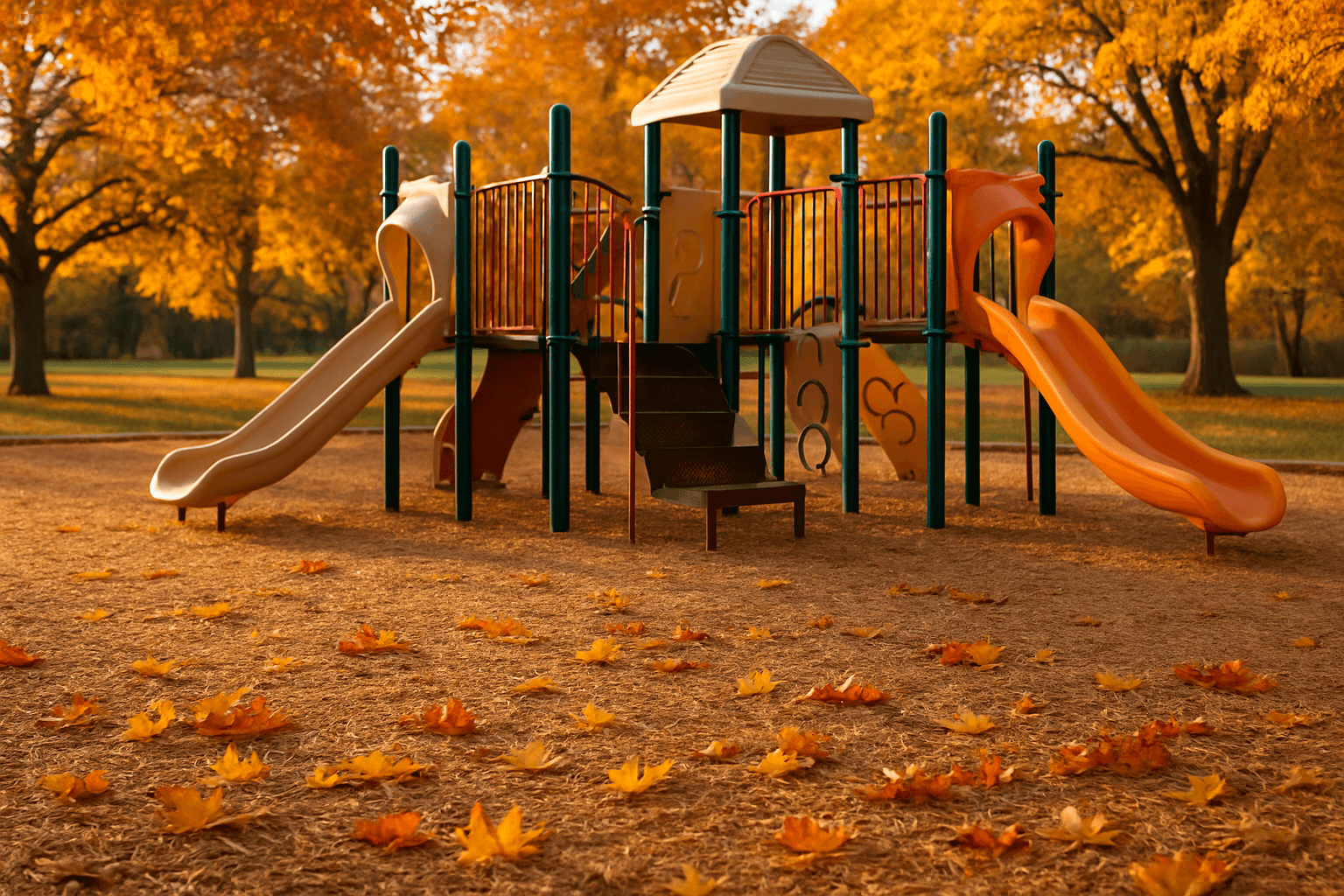
Don't Let Mulch Maintenance Slip Between Seasons
Playground mulch isn't a set-it-and-forget-it material. Whether you're working with engineered wood fiber (EWF), rubber mulch, or wood chips, the surface under those play structures needs attention every season. Skipping maintenance doesn't just make the playground look rough. It creates liability, fails inspections, and shortens the life of your surfacing investment.
Here's what your crew needs to do in each season to keep playground mulch performing at spec year-round.
Spring: Reset and Inspect After Winter
Spring is your most critical maintenance window. After months of freeze-thaw cycles, heavy precipitation, and reduced foot traffic, mulch compacts, migrates, and breaks down. You've got to reset the surface before the busy season hits.
Spring checklist:
- Depth check: Measure mulch depth at 10 or more points across the fall zone. ASTM F1292 requires adequate depth to achieve the necessary critical fall height (CFH) for your equipment. EWF typically needs 9 to 12 inches loose to achieve a 6-foot CFH. If you're under spec, top up now.
- Rake and loosen: Compacted EWF loses its impact attenuation properties fast. Rake the entire fall zone to break up compaction and restore the loose, energy-absorbing layer.
- Debris removal: Winter drops leaves, sticks, and organic debris into the surface. Pull it out before it breaks down further and introduces mold or contaminants.
- Drainage check: Look for standing water or low spots. Poor drainage causes mulch rot and creates uneven surfaces. Regrade if needed.
- Edge containment inspection: Check timber borders, rubber curbing, and edging for heaving from frost. Reset anything that's shifted.
Don't skip the depth check. It's the first thing an auditor or insurance inspector looks for, and it's the difference between a compliant surface and a liability.
Summer: Manage High Traffic and Displacement
Summer is peak season. Kids are on the playground every day, which means mulch migrates under swings, at slide landings, and along high-traffic paths faster than any other time of year.
Summer checklist:
- Bi-weekly displacement correction: High-traffic zones under swings and at slide exits lose depth fast. Push mulch back from the edges into the impact zones every two weeks during heavy use periods.
- Top up as needed: Even well-maintained surfaces need a mulch refresh mid-season if traffic is high. Budget for a summer replenishment delivery.
- Heat monitoring for rubber mulch: Rubber mulch surfaces get hot in direct sun. On extreme heat days (95 degrees F and above), check surface temps before kids use the playground. Communicate this to your clients, especially on south-facing or unshaded installs.
- Weed control: Summer heat accelerates weed growth through the mulch layer. Pull weeds before they establish root systems that destabilize the surface and push through the fall zone.
- Foreign object sweeps: High-traffic season means more debris: bottle caps, rocks, broken toys. Do a weekly sweep and remove any visible foreign objects. EWF hides sharp objects well, so sweep thoroughly.
Keep a log of your displacement corrections and depth checks. It's documentation your client can use if there's ever a liability question.
Fall: Prep for Winter and Top Up Depth
Fall maintenance is about setting the surface up to survive winter in good shape. It's also your last chance for a depth top-up before cold weather slows or stops deliveries in your region.
Fall checklist:
- Leaf removal: Wet leaves mat down on top of mulch, block drainage, and accelerate surface breakdown. Remove them before they decompose into the EWF layer.
- Final depth check and top-up: Measure depth across the fall zone. If you're within 2 inches of the minimum spec, top up now. Waiting until spring means operating undersized all winter.
- Edge and border repairs: Fix any shifted edging before ground freeze locks it in place at the wrong position. Heaved timber borders won't reset easily in February.
- Drainage clearing: Clear drain inlets and low spots before the rainy season hits. Standing water in the fall creates ice in the winter.
- Document the surface condition: Take photos and record depths. This is your baseline for spring inspection and your protection if a winter incident claim comes in.
If your region gets heavy snow, tell your clients not to plow or shovel snow off the mulch surface with metal equipment. A steel blade scrapes out EWF or gouges rubber mulch fast.
Winter: Monitor and Protect
Winter maintenance is the lightest of the four seasons, but don't ignore the surface entirely. Most of the work is about preventing damage rather than active upkeep.
Winter checklist:
- Snow and ice management: Don't use salt or chemical de-icers on or near EWF. Salt degrades natural wood fiber and contaminates the surface. Use sand on adjacent walkways if traction is needed.
- Post-storm checks: After heavy snow or ice storms, check that the surface hasn't been disturbed by plowing activity or heavy ice accumulation. An ice sheet over EWF can compress and flatten the surface significantly.
- Keep equipment off the surface: Snowblowers and plows don't belong on the mulch fall zone. Mark the boundaries with stakes if you have crews doing site snow removal.
- Inspect after thaws: Freeze-thaw cycles move mulch. After any significant thaw, do a quick check for displacement and compaction. Address it before the next freeze locks the surface in the wrong position.
Winter is also a good time to plan your spring maintenance schedule and order your top-up materials. Spring delivery windows fill up fast, and getting ahead on your order means your crew starts the season ready instead of waiting on a delayed delivery.
Year-Round Record Keeping
Every maintenance visit should be documented. Keep a maintenance log for each playground that includes:
- Date of visit
- Mulch depth measurements at 5 to 10 points across the fall zone
- Condition notes covering compaction, debris, and displacement
- Work performed, including raking, top-up amounts, and edging repairs
- Next scheduled visit
This documentation does two things: it proves you're maintaining the surface to spec, and it creates a service record that protects you and your client if there's ever an injury claim.
Get Your Materials Lined Up
GetMulch delivers bulk EWF and rubber mulch direct to your job site. We stock every major ASTM-rated surfacing product and schedule deliveries around your maintenance calendar. Get a quote at getmulch.com.