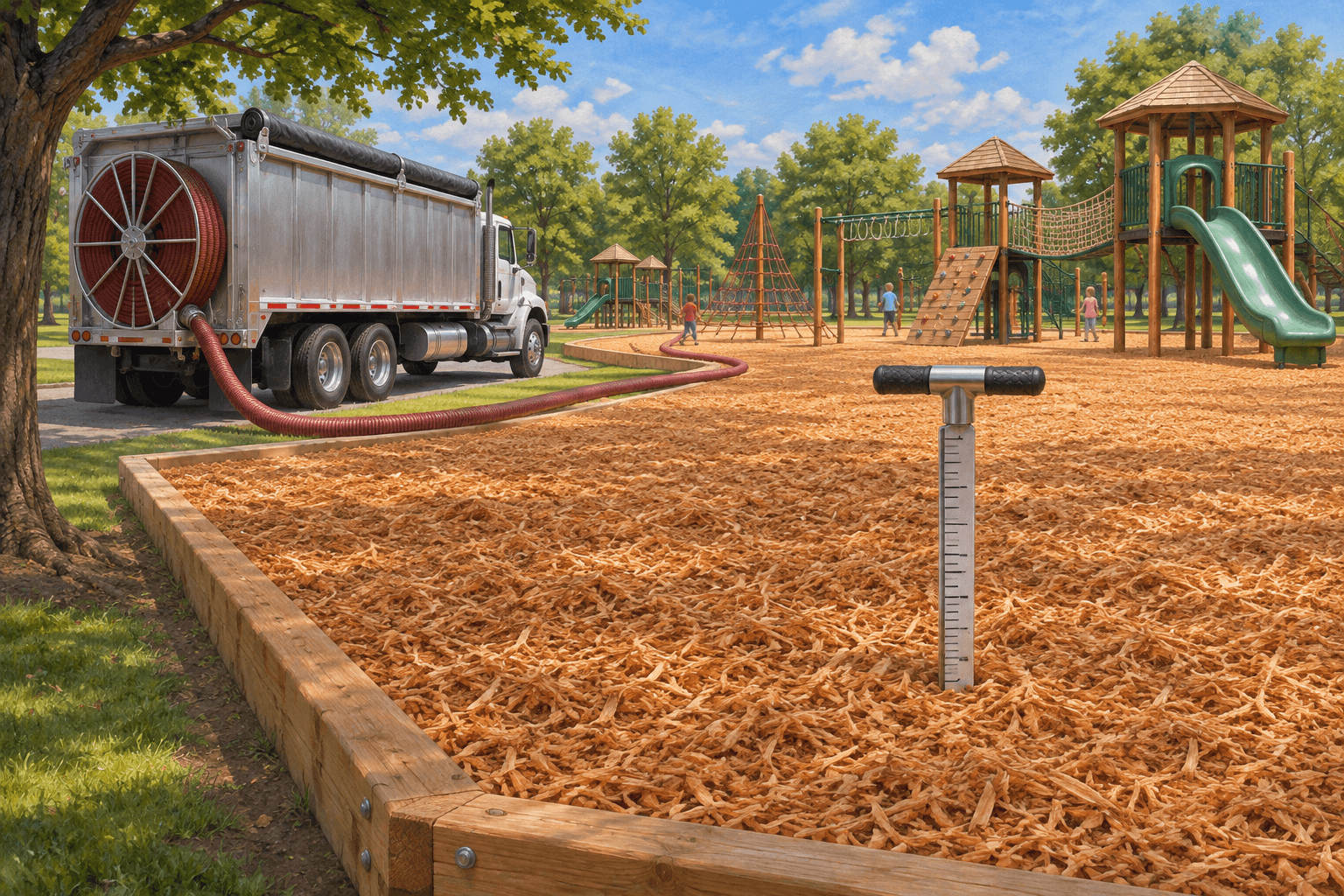
The Test Is Not What You Think
Most installers know the depth numbers. What catches people at inspection is not knowing what ASTM F1292 is actually measuring.
The standard doesn't specify a minimum depth. It specifies a maximum G-force on impact: 200g peak deceleration and 1,000 HIC (Head Injury Criterion). Those are the numbers an accredited lab measures when they test loose-fill materials in a controlled drop. The depth requirements you see in charts are simply the depths at which tested EWF meets those thresholds under different fall heights.
That distinction matters at sign-off. An inspector checking your surface isn't just measuring depth. They're asking whether your installed material, at its current depth and condition, would still perform within spec. Freshly blown, uncompacted EWF behaves differently than the same material after two months of foot traffic and rain.
The Numbers: Depth by Fall Height
ASTM F1292 test data for engineered wood fiber shows these minimum installed depths for new, uncompacted material:
| Maximum Fall Height | Minimum EWF Depth | |---|---| | 4 ft | 6 inches | | 5 ft | 7 inches | | 6 ft | 9 inches | | 7 ft | 10 inches | | 8 ft | 10 inches | | 9 ft | 11 inches | | 10 ft | 12 inches | | 11 ft | 12 inches | | 12 ft | 12 inches |
These numbers assume properly specified EWF: ASTM F2075 grade, virgin or certified recycled wood fiber with consistent particle size and no contaminants. Off-spec material from an unlisted vendor can fail impact attenuation tests even at the right depth.
How Compaction Changes Your Numbers
Here's the problem with installing to spec depth and walking away: EWF compacts.
Under normal playground use, EWF loses 15-25% of its installed depth within the first year. High-traffic zones, under swings, at the base of slides, landing zones at climbing structures, compact faster. They can drop 30% or more in the first few months.
If you install 9 inches of EWF under a 6-foot climber, you're at spec on day one. After a moderate season, that same spot may measure 7 inches. You're no longer in compliance.
The smart move is to install to an overcap depth. A 25% buffer means installing 11-12 inches where the spec calls for 9. This gives you a compliant surface through the first year without needing a top-off call. Document both numbers: the installed depth and your anticipated settled depth.
There's one more wrinkle. EWF doesn't compact evenly. Measure five spots in the same zone and you'll get five different readings. For sign-off purposes, the worst reading counts. Use a minimum of three depth probes per fall zone and document every one.
Common Mistakes That Fail Inspections
You'd be surprised how many inspections fail not because the depth was wrong, but because the documentation was wrong or the material wasn't what it claimed to be.
Measuring from the wrong reference point. Depth is measured from the finished EWF surface to the safety zone boundary: either the ground or a subbase. If you have a drainage layer or rubber pad below your EWF, that doesn't count toward ASTM F1292 compliance depth. EWF only.
Insufficient zone coverage. The fall zone under a 6-foot structure extends outward, not just directly below. CPSC guidelines define zone radius by fall height. Depth needs to be verified across the entire fall zone, not just the center.
Mixing EWF grades. ASTM F1292 test data was developed on specific materials. If you supplement spec EWF with a different grade or species mix mid-job, you may not be installing a tested system. Stick to one certified material per zone.
No delivery documentation. Inspectors want to see what material was delivered, not just what was installed. Keep the delivery receipts, the material spec sheets, and the ASTM F1292 test reports. These prove your material is part of an accredited test, not just a wood chip.
What to Put in Your Close-Out Package
A close-out package that holds up to scrutiny has four things.
Material documentation. Product name, manufacturer, lot number if available. Attach the ASTM F2075 compliance certificate and the ASTM F1292 test report from the manufacturer or an accredited lab. Include your delivery receipts showing the volume installed.
Depth measurements. A site diagram with fall zones marked. At least three depth readings per fall zone, with the probe location noted. Date of measurement. Name of the installer who took readings. Use a depth probe, not a screwdriver.
Equipment reference. Fall heights for each piece of equipment, pulled from the equipment manufacturer's documentation or the original spec. This shows the inspector which depth tier applies where.
Installer's statement. One page. Date installed. Total volume installed. Material used. Statement that the surface meets or exceeds ASTM F1292 depth requirements at the noted fall heights as of the date of install. Your signature and company name.
This package doesn't take long to assemble. It takes 30 minutes if you've kept notes through the job. Without it, you're depending on the inspector to take your word for it.
November Is the Right Time to Get This Right
November close-out season is not the time to discover you're two inches short. Lead times on EWF extend in December, and you don't want your sign-off sitting in limbo waiting on a material delivery.
Check your depths before you call for final inspection. Measure the high-traffic zones first. If you're under spec, top off now while you can still coordinate a delivery this month.
GetMulch can deliver certified EWF to most markets in 1-3 business days. If you're finishing jobs this month and need to verify compliance or get a top-off order placed, get a quote at getmulch.com today.