Before the First Shovel Hits the Ground
Every playground installation your crew touches has a specific depth requirement. Get it wrong and you're not just failing an inspection -- you're putting kids at risk and handing your company a liability problem. ASTM F1292 sets the standard. Your job is making sure every person on your crew knows it before they touch a single bag of mulch.
This isn't a one-time training. It's a pre-installation briefing you run every single job, without exception.
What ASTM F1292 Actually Requires
ASTM F1292 measures how well a surface material absorbs impact. It ties directly to Critical Fall Height (CFH), which is the maximum height from which a child can fall without suffering a life-threatening head injury.
Here's what your crew needs to know before they start:
Engineered Wood Fiber (EWF):
- 6 inches minimum for CFH up to 6 feet
- 9 inches minimum for CFH up to 10 feet
- 12 inches minimum for CFH up to 12 feet
Rubber Mulch:
- 6 inches compressed depth for CFH up to 12 feet (verify against manufacturer spec)
Wood Chips or Bark Mulch:
- 12 inches minimum for CFH up to 12 feet
Pea Gravel or Sand:
- 12 inches minimum for CFH up to 12 feet
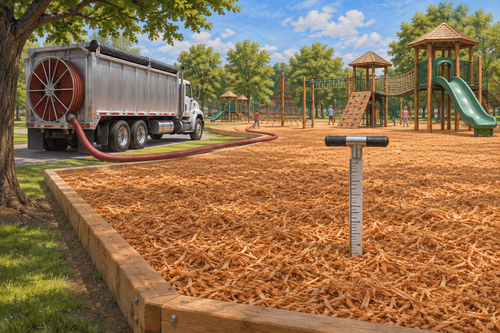
The critical number on every job is the tallest play element. That height determines your minimum depth. If a slide peak sits at 8 feet, you need 9 inches of EWF minimum -- not 6, not close to 9. Nine inches, confirmed with a measurement rod before you move on.
Why the Briefing Happens Before Work Starts
Your crew doesn't have time to read the standard on the job. They need the relevant numbers before equipment drops from the truck. A five-minute briefing before work starts prevents:
- Underfilled fall zones that fail inspection
- Rework costs and delayed project completion
- Liability exposure if a child is injured on a surface your crew installed
State inspectors and Certified Playground Safety Inspectors (CPSIs) check depth at multiple points across the fall zone. One shallow spot can fail the whole surface. One undersized zone can shut down a park and put your company name on a violation report.
The briefing takes five minutes. The rework takes half a day. Run the briefing.
How to Run It
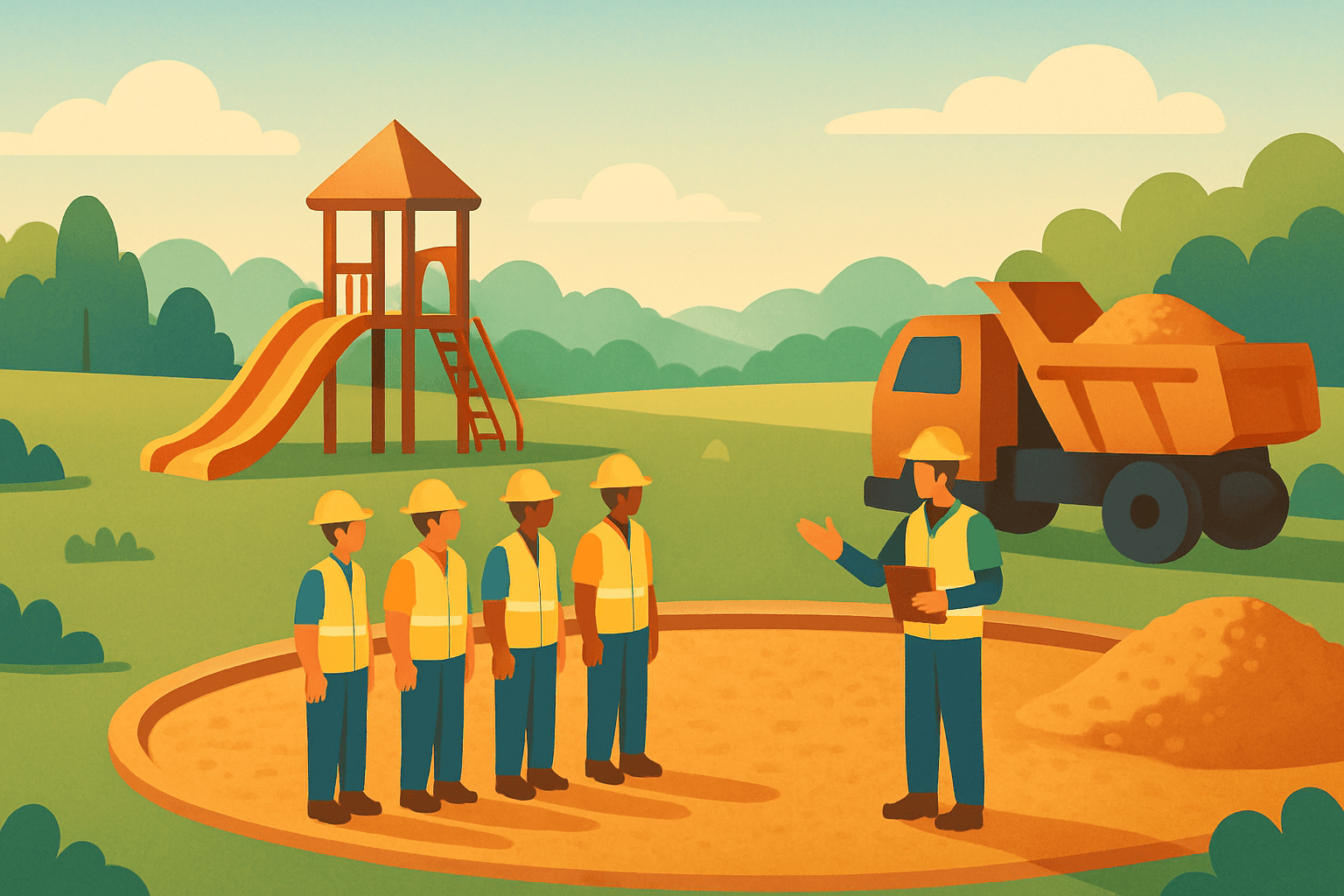
Pull your crew together before anyone lifts a shovel. Cover these four points:
1. Confirm the CFH Look at the play structure's spec sheet or measure the tallest accessible element. Write the number down and say it out loud: "This structure tops out at 10 feet. We need a minimum of 9 inches across the full fall zone." No ambiguity.
2. Map the Fall Zone The fall zone extends 6 feet beyond any play equipment on all sides -- more for slides and swings. Walk the perimeter with your crew lead before spreading material. Mark it. Every square foot of that zone needs to meet the depth requirement.
3. Set Your Depth Markers Before you start spreading, drive stakes or use depth rods at consistent intervals across the fall zone. Don't trust eyeballing. A depth rod takes 10 seconds to place. A rework takes 4 hours to fix.
4. Assign the Depth Check Role Name one person responsible for spot-checking depth during the install. That person calls out low spots before the crew moves to the next section. One check per 200 square feet is a solid standard. If it reads low, add material right there and recheck before moving on.
During the Job: Check Depth, Don't Assume It
Loose fill materials settle and compact. EWF compresses as your crew walks through it. What looks like 10 inches freshly spread reads closer to 8.5 inches after foot traffic.
Check depth at:
- The base of the tallest play element
- The highest-traffic landing zones (bottom of slides, swing arc endpoints)
- The perimeter of the fall zone
- Any area where material was raked or redistributed from another section
If a check comes in low, add material immediately and recheck before moving. Don't flag it for later. Later doesn't exist on a job site.
Document Before You Leave
Before your crew packs up, take depth measurements at three to five points across the fall zone and photograph them. Write the readings on your job sheet and sign it. If a CPSI shows up the following week and finds a low spot, you've got documentation of what your crew actually installed.
Some clients -- especially school districts and municipalities -- require a signed depth certification. Know before the job starts whether your client expects documentation. If they do, your crew lead signs off on the readings before anyone loads the truck.
Make It a Habit
The best crews don't treat the depth briefing like a legal formality they check off a list. They treat it like a quality standard they own.
Put the briefing into your pre-job template. Print the relevant CFH depth chart on your job packet. Train your crew leads to run it without you on site. When your crew lead is calling out CFH numbers before the truck doors open, you've built the habit.
ASTM F1292 compliance isn't complicated. It's a number, a measurement tool, and a five-minute conversation before every installation. Your crew's already doing harder things every day.
If you're sourcing EWF, rubber mulch, or any loose fill surfacing for your next project, GetMulch.com delivers the right material in the right quantities to your site. Start your order at getmulch.com.