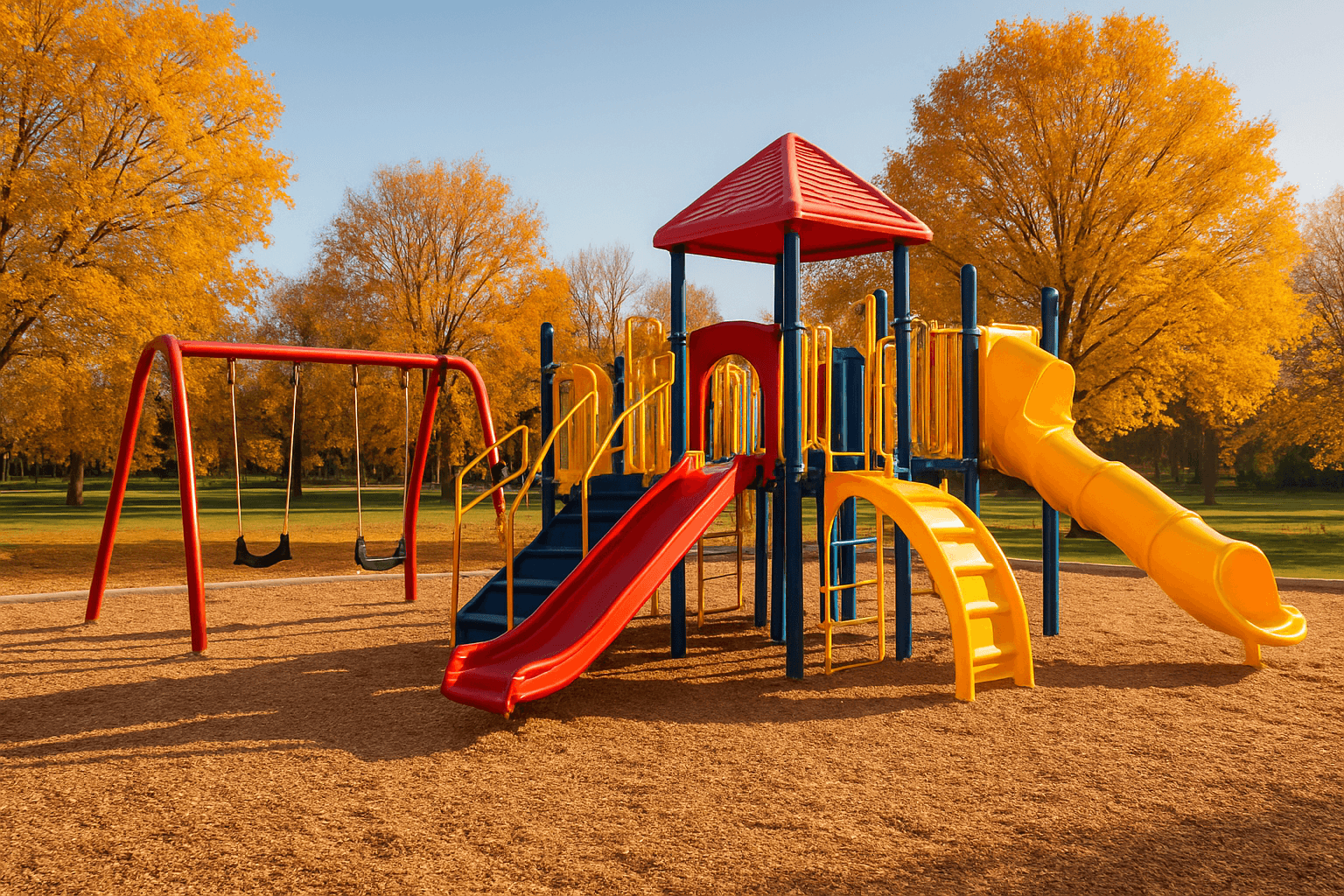
Ordering playground mulch in January saves real money. Park districts and school facilities managers who place mulch orders in Q4 or early Q1 typically pay 15 to 25 percent less per cubic yard than buyers who wait until spring. Suppliers have open calendar space, blower trucks aren't booked, and crews are available. You get lower pricing because the supplier wants your job.
Why Playground Mulch Off-Season Pricing Is Lower
Three cost drivers create the seasonal price swing.
Blower truck availability. A single blower truck services dozens of playgrounds in March and April. In January, that same truck may sit idle. Suppliers discount jobs that fill slow calendar windows because a truck on a job is more profitable than a truck sitting in a yard.
Material stockpiling. Suppliers build inventory through the winter when production costs are lower and demand is flat. A supplier with full storage wants to move material. Buyers who order early get competitive pricing; buyers who call in April compete with everyone else.
Crew scheduling pressure. Installation crews work fewer hours in winter. Suppliers use off-season bookings to guarantee crew hours and avoid layoffs. That incentive translates directly into better pricing for early orders.
Supplier calendar pressure. By February, spring slots start filling. By March, many suppliers in high-density markets are quoting 6 to 8 week lead times. Buyers who waited are negotiating from a weak position.
How Much Can You Realistically Save Buying Playground Mulch in Winter?
The table below reflects typical price ranges buyers see when comparing January versus April orders for the same installation scope.
| Order Timing | Typical Savings vs. Peak Rate | Scheduling Priority | |---|---|---| | October to December | 15 to 25% below peak | First available spring slot | | January to February | 10 to 15% below peak | Preferred spring window | | March | 0 to 5% below peak | Limited availability | | April or later | Full peak rate | Often 4 to 6 weeks out |
A park district spending 0,000 on engineered wood fiber in April might pay 2,000 to 4,000 for the same install ordered in January. That's real budget recapture, not a marginal discount.
How to Plan a Spring Install From a Winter Order
Locking in off-season pricing doesn't mean the material arrives tomorrow. It means you're securing the contract and install date now. Here's what to confirm before you sign.
Site readiness date. Confirm when the playground surface will be accessible. If construction or surface prep pushes your readiness to May, tell the supplier. Most will hold your off-season rate if the delay is disclosed upfront.
Equipment access. Blower trucks need a clear path to the fill zone, typically within 200 feet. Confirm gate widths, overhead clearance, and any site restrictions before the install date.
Material delivery versus install timing. Some suppliers store material and deliver close to the install date. Others deliver on the install day only. Get clarity on the logistics before signing.
Depth and square footage confirmation. Off-season quotes lock in price per cubic yard. Make sure your site measurements are current before you commit. A significant scope change after signing can affect pricing.
What Questions to Ask Suppliers When Locking In Off-Season Pricing
When you reach out to a supplier in Q4 or January, ask these four questions directly.
- Do you offer off-season pricing for spring delivery commitments? Some suppliers discount automatically; others only discount if asked.
- What's your price lock guarantee? You want written confirmation that the quoted rate holds through your install date, even if material costs shift in spring.
- How flexible is the delivery window? Ask whether a two-week shift in your install date triggers a price change.
- What deposit or commitment do you require? Most suppliers ask for a deposit to hold the rate. Know this before your budget cycle closes.
What Can Go Wrong With Early Procurement
Early orders reduce risk for most buyers, but a few issues come up.
Site isn't ready. If a playground surface replacement runs late, you may take delivery of material before the site is accessible. Engineered wood fiber stored outdoors needs to stay dry. Confirm whether the supplier will hold material or whether you need covered storage on your end.
Scope changes. A playground redesign between January and April can change your cubic yard requirement. Lock in a rate but confirm the supplier's policy on quantity adjustments before signing.
Budget approval delays. Off-season pricing often expires before spring. If your budget approval runs into late February, confirm with the supplier whether they'll honor the rate if approval is delayed. Get that commitment in writing.
Practical Timeline: When to Contact Suppliers for Spring Projects
| Month | Action | |---|---| | September to October | Confirm project scope, square footage, and equipment access requirements | | October to November | Issue RFQ or contact suppliers, compare off-season rates | | November to December | Sign contract, secure price lock, confirm spring install window | | January to February | Final site prep planning, confirm equipment access | | March | Coordinate final delivery details and site walkthrough | | April to May | Installation |
FAQ: Playground Mulch Seasonal Pricing
Is off-season pricing available for engineered wood fiber specifically?
Yes. Engineered wood fiber is the most common material for off-season discounts because it's stockpiled in bulk. Rubber mulch pricing varies more by material cost and fluctuates less seasonally, though some suppliers still discount off-season install slots.
How do I justify an early purchase order to my finance department?
Run the numbers. If your spring install costs 0,000 at peak rates and you can lock in 3,000 with a January order, the savings pay for any early commitment deposit. Present the price delta and the price lock terms. Finance approves early commitments when the math is clear.
Can I lock in pricing without a signed contract?
Most suppliers won't hold off-season pricing on a verbal agreement. You'll need a signed contract or a deposit to secure the rate. Get it in writing, including the price lock period and any conditions for scope changes.
What if my install gets pushed to summer?
Disclose the risk upfront. Ask the supplier whether the off-season rate applies if delivery shifts to June. Most suppliers accommodate a reasonable delay if the scope stays the same. Some add a surcharge if the install moves into peak season. Know the terms before you sign.