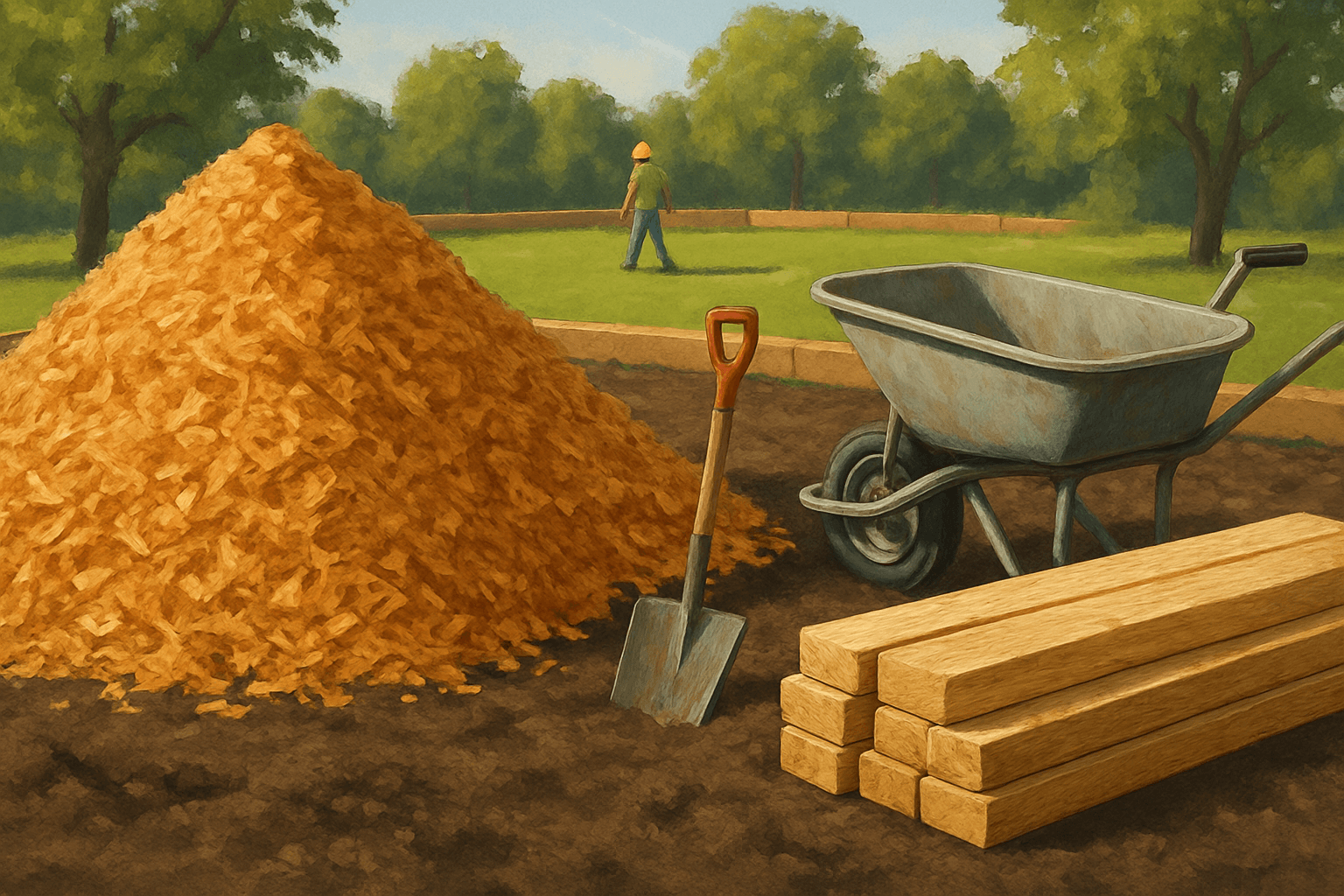
Getting bulk mulch to a playground site is straightforward when the site is ready. When it's not, you get delays, damaged borders, a blower truck that can't reach the drop zone, and a crew scrambling while the clock runs. This checklist covers everything you need in place before the truck arrives.
What Site Conditions Qualify for Bulk Mulch Delivery
Blower trucks are large. A standard mulch blower truck needs a minimum 10-foot wide clear path from the road to the fill area. Overhead clearance requirements run 14 feet minimum, but 16 feet is safer when you account for hose reels and boom positioning. Walk every inch of that approach before delivery day.
Low-hanging branches, utility lines, and overhead fixtures are the most common clearance killers. Surface load capacity is the second. A loaded blower truck can top 60,000 to 80,000 lbs. If your access route crosses soft ground, freshly installed turf, or a detention basin, confirm the surface can carry that load before you schedule anything.
Wet soil conditions cut load-bearing capacity fast. If it rained in the last 48 hours and you're dealing with clay-heavy soil, walk the route and reassess. A mired truck costs more in delays than pushing back one day.
The 10-Step Playground Mulch Site Prep Checklist
1. Measure the fill zone. Know your target area in square feet before anything else. Calculate cubic yards at the correct depth. ASTM F1292 sets 9 inches as the standard for equipment with fall heights up to 8 feet. Have that number confirmed with your supplier before you schedule delivery.
2. Clear the drop zone completely. Remove all debris, old surfacing material, rocks, and construction waste from the fill area. Blower hoses can handle some material, but foreign debris damages equipment and creates safety hazards in the finished mulch layer.
3. Install all containment borders first. Every timber border, rubber curb, or concrete edge must be fully installed and anchored before the truck shows up. Borders absorb the force of blown material during fill. Installing them after means you're moving mulch twice. Get them in, level them, anchor them.
4. Confirm access route dimensions. Walk the full truck path from road to fill zone. Minimum 10-foot width. Minimum 14-foot overhead clearance. Mark hazards with cones or flagging tape. If there's any ambiguity on clearance, call your delivery contact with the actual measurements before delivery day.
5. Check ground conditions on the access path. Wet soil, slopes over 10 percent, and loose aggregate surfaces all affect whether a blower truck can safely position and operate. If conditions are marginal, notify your supplier so they can bring the right equipment or adjust the approach.
6. Coordinate utility locates. Call 811 before any border installation that involves digging. Have all utility marks cleared from the fill zone. If the hose has to cross a utility corridor, know where every line runs.
7. Stage your crew and tools on site. Have your crew there before the truck arrives. You need people to guide the hose, manage the fill zone, and handle any border adjustments in real time. Tools required on delivery day: rakes, landscape rakes, levels, tampers, and a measuring wheel. Don't leave this to the blower crew.
8. Have your measurements and material spec on hand. Your driver will confirm cubic yards and material type on arrival. Have your purchase order, material spec sheet, and fill zone measurements printed or on your phone. Any discrepancy is faster to resolve before they start blowing than after.
9. Protect adjacent surfaces. If the playground sits next to asphalt, concrete, or turf areas, install temporary barriers or tarps before delivery. Blown mulch migrates. Protecting adjacent surfaces now beats cleaning them after.
10. Walk the site one hour before arrival. Walk the fill zone, the access route, and the surrounding site. Confirm the crew is staged, the borders are solid, the route is clear, and you have everything on hand. One hour gives you time to fix last-minute issues without delaying the truck.
Common Mistakes That Cause Delivery Delays or Damage
Contractors who run into problems on delivery day share a few patterns. Borders installed same-day as delivery fail under the load of blown material. Access routes that looked fine on a dry day turn into problems after rain. Crews who show up after the truck. Drop zones not cleared of existing surfacing.
The most expensive mistake is skipping the access route confirmation. A blower truck that can't reach the fill zone either can't finish the job or has to dump at distance, which puts your crew moving material by hand. Neither option is cheap.
Slopes are also underestimated. Anything over 10 percent on the access route affects truck positioning and stability. If your site has grade changes between the road and the fill zone, flag them for your supplier in advance.
What to Have Staged and Ready on Delivery Day
Show up with the fill zone cleared, borders installed, and these items ready:
- Printed or digital fill spec (cubic yards, depth, material type)
- Rakes and landscape rakes
- Tamping tools
- A level for checking finish grade
- A measuring wheel or tape to spot-check depth during fill
- Enough crew to manage the hose zone and fill area at the same time
FAQ: Preparing a Playground Site for Bulk Mulch Delivery
What is the minimum access width needed for a mulch blower truck? Plan for a minimum 10-foot clear path from the road to the fill zone. Measure any tight spots and give those dimensions to your supplier before delivery. If the corridor narrows below 10 feet at any point, it needs to be addressed before the truck arrives.
Do borders need to be installed before mulch is delivered? Yes. All borders, curbs, and containment edges must be fully installed and anchored before the blower truck shows up. Borders take the force of blown material during the fill operation. Installing them after delivery means relocating mulch, which costs time and money.
How do wet soil conditions affect mulch delivery? Wet soil drops load-bearing capacity on your access route. A loaded blower truck can exceed 60,000 lbs. On wet or clay-heavy soil, the truck can rut or sink on approach. If it rained recently, walk the route before delivery and make a call. Rescheduling 24 hours is cheaper than a recovery operation.
What mulch depth meets ASTM playground safety standards? For equipment with a fall height up to 8 feet, ASTM F1292 calls for 9 inches of loose fill material. Confirm the maximum fall height of every piece of equipment on the site and specify the correct depth with your supplier before you schedule delivery.